


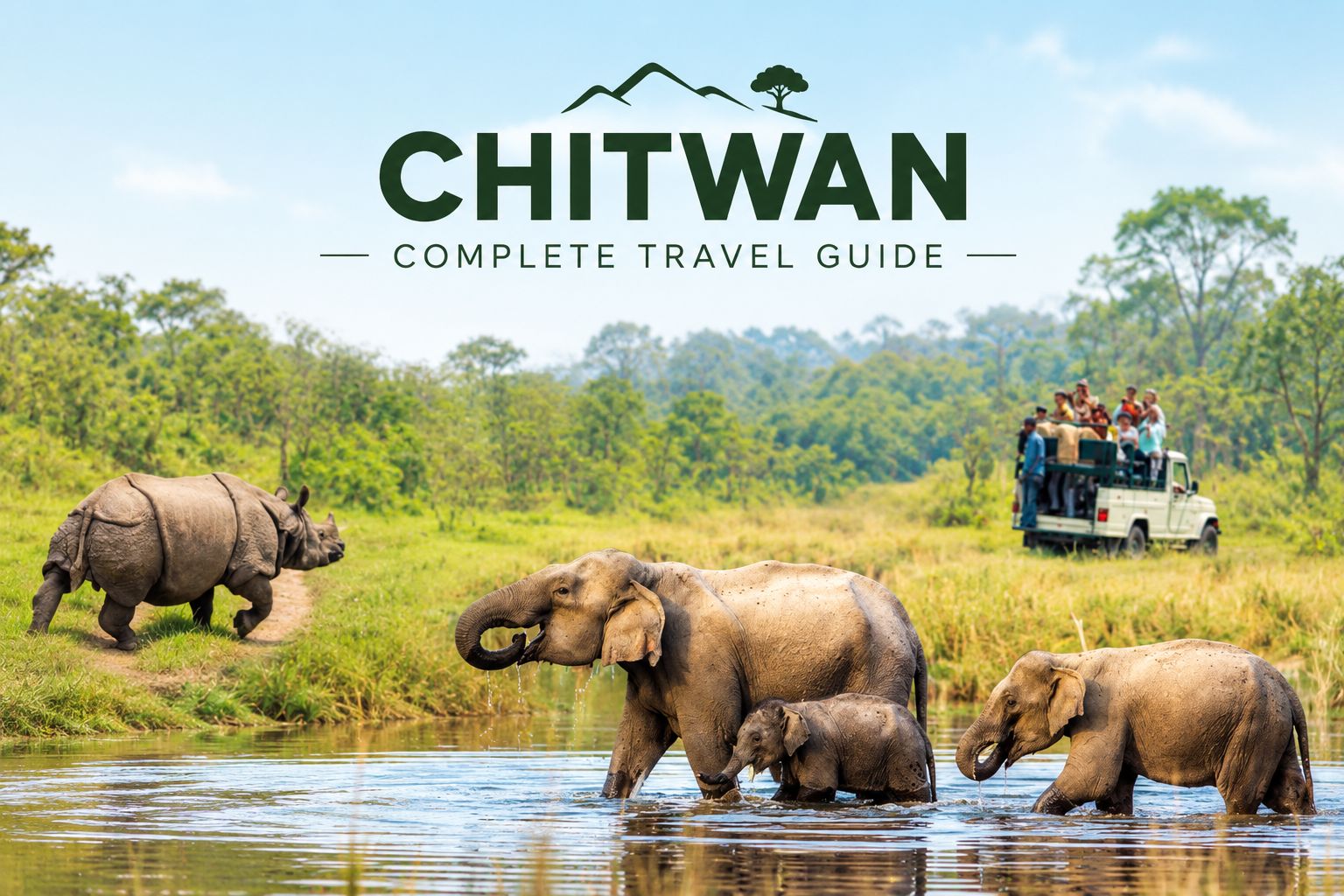
Chitwan is one of the best places to visit in Nepal for wildlife, nature, adventure, and authentic Tharu culture. Best known for Chitwan National Park, Nepal’s first national park and a UNESCO World Heritage Site, the region offers jungle safaris, one-horned rhinoceros sightings, Royal Bengal tigers, crocodile and gharial watching, birdwatching, canoe rides, jungle walks, and cultural experiences.
Located in Nepal’s southern Terai, Chitwan is also one of the easiest wildlife destinations to reach from Kathmandu. You can travel by road or take a short flight to Bharatpur and continue toward the park.
Whether you are planning a weekend getaway, a family holiday, a wildlife safari, or a longer Nepal itinerary, this Chitwan travel guide covers everything you need to know—from where Chitwan is and which province it belongs to to how to reach Chitwan National Park, where to stay, what to do, how many days to spend, and how many tigers live in the park.
Where Is Chitwan?
Chitwan is a district in south-central Nepal, located in the Inner Terai region. It lies between the Mahabharat and Siwalik ranges and is famous for its subtropical forests, rivers, grasslands, wetlands, villages, and diverse wildlife.
The most famous attraction in the district is Chitwan National Park, which covers 952.63 square kilometres. The park is home to species including the greater one-horned rhinoceros, Royal Bengal tiger, leopard, sloth bear, gaur, wild boar, deer, crocodiles, gharials, and hundreds of bird species.
For visitors, “Chitwan” can refer to the wider district, while “Chitwan National Park” refers specifically to the protected national park.
Which Province Is Chitwan?
Chitwan District is in Bagmati Province (Province No. 3) of Nepal.
The district includes major destinations such as Bharatpur, Sauraha, Meghauli and other communities around Chitwan National Park.
One important distinction is that the Chitwan National Park itself extends across more than one administrative province and district area, while Chitwan District is part of Bagmati Province. Official conservation documents describe the park as extending across Chitwan, Nawalpur, Parsa and Makwanpur areas.
So, if you are asking “Which pradesh is Chitwan?”, the simple answer is:
Chitwan District is in Bagmati Province, Nepal. If you want to cover other tourist destinations in Bagmati Zone you can check Panchpokhari Trek for 3-5 days, Gosaikunda Trek from Dupcheshwor or Hike Around Phulchwoki for bird sight seeing at the height of 2700 meters.
When Was Chitwan National Park Established?
Chitwan National Park was established in 1973.
It was the first national park established in Nepal. Before becoming a national park, the area had already received protection because of its important rhinoceros population and wildlife habitat.
The park was initially smaller and was later expanded. In 1984, Chitwan National Park was designated a UNESCO World Heritage Site because of its outstanding ecological and biological importance.
Today, the park covers approximately 952.63 square kilometres, with a buffer zone of about 729 square kilometres.
What Is Chitwan National Park Famous For?
Chitwan National Park is famous primarily for its wildlife and jungle safari experiences.
The park is particularly well known for:
- Greater one-horned rhinoceroses
- Royal Bengal tigers
- Wild elephants
- Leopards
- Gaur
- Sloth bears
- Spotted deer and other deer species
- Marsh crocodiles
- Gharials
- More than 500 bird species
- Sal forests and tall grasslands
- Tharu culture and villages
- Jungle safaris
- Canoeing and nature walks
The Nepal Tourism Board lists 56 mammal species, 49 species of amphibians and reptiles, and 525 bird species for Chitwan National Park.
For many travelers, the biggest attraction is the possibility of seeing a one-horned rhinoceros in the wild. Tiger sightings are possible but never guaranteed because tigers are elusive wild animals.
How Many Tigers Are There in Chitwan National Park?
According to Nepal’s 2022 national tiger census, an estimated 128 tigers were recorded in Chitwan National Park and adjoining forests.
This made Chitwan one of Nepal’s most important tiger habitats. Nepal’s total tiger population was estimated at 355 in the 2022 census, with Chitwan accounting for 128 of those tigers.
The number has increased substantially over previous surveys. Chitwan had an estimated 93 tigers in 2018, compared with 128 in 2022.
It is important to remember that these are population estimates from scientific surveys, not a count of animals that visitors can expect to see during a safari.
The latest widely published national tiger census figure for Chitwan is 128 tigers, based on the 2022 survey. Tiger populations are monitored periodically, so travelers should check the latest Department of National Parks and Wildlife Conservation information if an updated census has been released.
How Far Is Chitwan From Kathmandu?
Chitwan is roughly 145–150 km by road from Kathmandu, depending on your exact destination and route.
The Nepal Tourism Board lists the distance from Kathmandu to the Chitwan National Park headquarters at Kasara at approximately 146 km by road.
However, your actual travel distance and time depend on whether you are going to:
- Bharatpur
- Sauraha
- Kasara
- Meghauli
- Another entrance or resort area
Road conditions can also significantly affect travel time.
How Far Is Chitwan National Park From Kathmandu?
The Chitwan National Park headquarters at Kasara is approximately 146 km by road from Kathmandu.
Another convenient option is flying from Kathmandu to Bharatpur Airport. Bharatpur is about 21 km from the park headquarters, according to the Nepal Tourism Board.
This makes Chitwan one of the most accessible national parks for travelers starting their Nepal trip in Kathmandu.
How to Get to Chitwan From Kathmandu?
There are three main ways to get from Kathmandu to Chitwan:
Tourist Bus
Tourist buses are one of the most popular options. Most travelers heading toward the Sauraha side of Chitwan use tourist buses or other road transportation from Kathmandu. Depending on traffic, road conditions and stops, the journey can take considerably longer than the straight-line distance suggests.
Private Car or Jeep
A private vehicle is more comfortable and flexible, particularly for families or groups. You can stop along the way, choose your departure time, and travel directly to your hotel in Sauraha, Meghauli or another part of Chitwan. You can even rent car from Kathmandu to Chitwan and vice versa at an affordable pricing.
Flight to Bharatpur
Flying from Kathmandu to Bharatpur Airport is the fastest option.
The Nepal Tourism Board states that Bharatpur is approximately a 20-minute flight from Kathmandu, followed by a road transfer toward Chitwan National Park. This is particularly convenient if you have limited time.
How to Reach Chitwan National Park From Kathmandu?
The easiest route depends on where you plan to stay.
- For Sauraha, travel from Kathmandu toward Chitwan and continue to Sauraha after reaching the Chitwan/Bharatpur area.
- For Meghauli, travel toward Bharatpur and continue west toward the Meghauli side of the park.
- For the park headquarters at Kasara, continue from Bharatpur toward the park entrance area. Kasara is approximately 21 km from Bharatpur.
If you are visiting Chitwan for a safari, it is usually better to choose your hotel first and then arrange transportation to that particular area rather than simply searching for “Chitwan National Park.”
Are Sauraha and Chitwan National Park the Same?
No. Sauraha and Chitwan National Park are not the same place.
Sauraha is a tourist town and gateway to Chitwan National Park. It is located beside the park and has hotels, resorts, restaurants, shops, tour operators and activity providers.
Chitwan National Park is the protected wildlife area itself.
Sauraha is particularly popular because it provides easy access to jungle activities while offering a large selection of accommodation. The Nepal Tourism Board describes Sauraha as a major tourist stop with hotels, resorts, homestays, restaurants and cultural experiences.
In simple terms:
- Sauraha = tourist hub
- Chitwan National Park = protected wildlife area
How to Visit Chitwan National Park?
The easiest way to visit Chitwan National Park is to stay in Sauraha or Meghauli and arrange activities through your hotel or a licensed local operator.
A typical Chitwan visit can include:
- Jeep safari
- Jungle walk
- Canoe ride
- Birdwatching
- Wildlife observation
- Tharu village visit
- Tharu cultural performance
- Visit to the crocodile/gharial breeding facilities
- Visit to the elephant breeding centre
- Sunset by the Rapti River
- Cycling around nearby villages
The Nepal Tourism Board describes a typical two-night/three-day Chitwan safari experience as combining wildlife activities, canoeing, cultural experiences and nature walks.
You also need a Chitwan National Park entry permit. The Nepal Tourism Board currently lists the park entry fee at NPR 150 for Nepali visitors, NPR 1,000 for SAARC nationals and NPR 2,000 for foreign visitors, with applicable taxes/conditions.
Because fees and regulations can change, check the latest official information before your trip.
How Can We Book Tickets for Elephant Rides at Chitwan?
Elephant-related activities in Chitwan require special consideration because wildlife tourism practices and regulations can change.
The Nepal Tourism Board’s current fee information still lists an elephant ride fare, but travelers should confirm whether elephant rides are currently operating, where they operate, and under what welfare standards before booking.
Rather than assuming an elephant ride is available, ask your hotel or a reputable local operator about current activities and choose experiences that prioritize animal welfare.
For most visitors, a jeep safari, canoe ride, jungle walk and wildlife observation provide excellent alternatives.
What to Do in Chitwan?
There is much more to Chitwan than a single jungle safari.
The best things to do include:
Go on a Jeep Safari
A jeep safari is one of the best ways to explore deeper areas of the park and look for rhinos, deer, wild boar, crocodiles, birds and, with luck, tigers.
A safari does not guarantee sightings. Wildlife moves freely through the forest, so patience and a knowledgeable guide are important.
Take a Canoe Ride
Canoeing along the Rapti or other waterways can provide opportunities to see crocodiles, gharials and waterbirds.
The slow pace is also a pleasant contrast to a jeep safari.
Go on a Jungle Walk
A guided jungle walk offers a completely different experience.
Instead of traveling quickly through the forest, you move slowly and learn to recognize animal tracks, plants, birds and other signs of wildlife.
Visit a Tharu Village
The indigenous Tharu communities are an important part of the cultural identity of the Chitwan region.
A village visit can introduce travelers to traditional architecture, food, music, dance and local ways of life.
Experience Tharu Culture
Many hotels and cultural centers organize traditional Tharu performances, including music and dance.
For travelers interested in more than wildlife, this is one of the best ways to understand Chitwan’s human history.
Visit the Gharial Breeding Centre
The gharial is a distinctive crocodilian species with a long, narrow snout.
The conservation facilities around Chitwan offer an opportunity to learn about breeding and wildlife protection. The Nepal Tourism Board also highlights the elephant breeding centre and gharial facilities as attractions.
Go Birdwatching
Chitwan is an excellent destination for birdwatchers.
The park’s rivers, wetlands, grasslands and forests attract resident and migratory birds. More than 500 bird species have been recorded in the park.
Watch the Sunset Over the Rapti River
A peaceful evening beside the Rapti River is one of the simplest and most enjoyable things to do in Sauraha.
You may even see wildlife near the river.
What to Do in Chitwan National Park?
If your primary goal is wildlife, prioritize activities inside and around the national park.
The best Chitwan National Park experiences are:
- Jeep safari
- Guided jungle walk
- Canoe trip
- Birdwatching
- Wildlife photography
- Nature observation
- Riverbank wildlife viewing
- Conservation-centre visits
A combination of activities is better than relying on a single safari because different species are active in different habitats and at different times.
What to Do in Chitwan, Nepal Beyond the National Park?
Chitwan is also worth exploring outside the park. Consider visiting:
- Sauraha
- Bharatpur
- Meghauli
- Tharu villages
- Rapti River
- Narayani River
- Devghat
- Beeshazar and Associated Lakes
- Chepang Hill Trail
- Local markets and food spots
The Nepal Tourism Board specifically lists Sauraha, Bharatpur, Devghat, Meghauli, Chepang Hill Trail and Beeshazar and Associated Lakes among places to see in the Chitwan region.
Temples and Religious Places to Visit in Chitwan
Although Chitwan is best known for wildlife, the region also has several religious and cultural attractions.
Devghat
Devghat is one of the most important pilgrimage areas in the region. Located at the confluence of the Kali Gandaki and Trishuli rivers, Devghat is known for temples, ashrams and religious significance.
It is particularly interesting for travelers who want to combine a wildlife trip with Nepal’s spiritual and cultural heritage.
Balmiki Ashram
Balmiki Ashram is another culturally significant site associated with Hindu traditions and the Ramayana. The Nepal Tourism Board includes Devghat and Balmiki Ashram among the attractions associated with Chitwan.
Tharu Cultural Sites
While not temples, Tharu cultural attractions are important for understanding the region’s indigenous heritage and should be included in a culturally focused Chitwan itinerary.
Where to Stay in Chitwan?
The best place to stay depends on the type of trip you want.
Sauraha
Choose Sauraha if you want:
- Lots of hotels and restaurants
- Easy access to safari operators
- A lively tourist atmosphere
- Budget accommodation
- Mid-range hotels
- Walking access to shops and the river
Sauraha is the most established tourist base for Chitwan and offers everything from community homestays to luxury resorts.
Meghauli
Choose Meghauli if you want:
- Luxury resorts
- A quieter atmosphere
- Riverside accommodation
- A more immersive jungle experience
- Upscale safari experiences
Meghauli is particularly attractive for couples, honeymooners and travelers looking for a premium wildlife holiday.
Best Hotels in Chitwan
Chitwan has accommodation ranging from budget guesthouses to luxury jungle lodges.
Barahi Jungle Lodge
Barahi Jungle Lodge is a strong choice for travelers seeking an upscale jungle experience in Meghauli.
The lodge sits near the Rapti River and offers accommodation designed around the surrounding wilderness, along with safari and nature experiences.
Meghauli Serai, A Taj Safari Lodge
Meghauli Serai is another high-end option for travelers looking for a luxury safari experience.
Its location in Meghauli makes it particularly suitable for travelers who prefer a peaceful resort environment rather than staying in the busier Sauraha area. Current accommodation listings identify it as a luxury property in Chitwan National Park.
Hotels and Resorts in Sauraha
Sauraha has a much wider selection of accommodation, including:
- Budget hotels
- Family-friendly resorts
- Boutique hotels
- Jungle lodges
- Luxury properties
- Homestays
For first-time visitors who want convenience and easy access to activities, Sauraha is generally the simplest place to base yourself.
How Many Days in Chitwan National Park?
For most travelers, 2 nights and 3 days is the ideal Chitwan itinerary.
This gives you enough time to experience several activities without making the trip unnecessarily long.
One Night
One night is possible if you are short on time, but it can feel rushed.
Two Nights / Three Days
This is the recommended option for most visitors.
You can combine:
- Jeep safari
- Canoe ride
- Jungle walk
- Tharu village visit
- Cultural program
- Birdwatching
- River sunset
The Nepal Tourism Board also describes a typical Chitwan safari experience as a two-night/three-day trip.
Three Nights / Four Days
Choose three nights if:
- Wildlife is your main interest
- You enjoy photography
- You want a slower itinerary
- You are staying at a luxury jungle lodge
- You want time for additional cultural and religious attractions
Suggested 3-Day Chitwan Itinerary
Day 1: Kathmandu to Chitwan
- Travel from Kathmandu to Chitwan by tourist bus, private vehicle or flight to Bharatpur.
- Check into your hotel and spend the afternoon exploring Sauraha or your resort surroundings.
- In the evening, enjoy a Tharu cultural performance and dinner.
Day 2: Wildlife Safari
Start early with a jungle safari. Depending on your package, you may combine a jeep safari, canoe trip, nature walk and wildlife observation.
Look for:
- One-horned rhinoceros
- Deer
- Wild boar
- Crocodiles
- Gharials
- Monkeys
- Birds
- Gaur
- Tigers
Finish the day beside the Rapti River or at your jungle lodge.
Day 3: Culture and Return
- Enjoy breakfast and a final nature activity.
- If time permits, visit a Tharu village, conservation centre or nearby cultural attraction before returning to Kathmandu.
Is Chitwan Worth Visiting?
Yes, Chitwan is absolutely worth visiting, especially if you want to experience Nepal beyond the Himalayas. Chitwan offers something completely different from Kathmandu and Pokhara. Instead of temples and mountain views, you get:
- Jungle
- Wildlife
- Rivers
- Grasslands
- Rhinos
- Tigers
- Birds
- Tharu culture
- Canoeing
- Safari adventures
It is also relatively accessible from Kathmandu, making it easy to add to a Nepal itinerary.
For first-time visitors to Nepal, combining Kathmandu + Pokhara + Chitwan creates a well-rounded trip covering culture, mountains and wildlife.
How Has Chitwan National Park Enhanced Tourism in Nepal?
Chitwan National Park has played a major role in developing Nepal’s wildlife tourism industry.
The park’s conservation success has created a tourism economy built around:
- Jungle safaris
- Hotels and resorts
- Local guides
- Transportation
- Restaurants
- Cultural performances
- Handicrafts
- Nature photography
- Birdwatching
- Conservation tourism
The protection of wildlife has made it possible for visitors to experience species such as the one-horned rhinoceros and Royal Bengal tiger in their natural habitat.
Tourism also creates economic opportunities for communities around the park. Sauraha, for example, has developed into a major tourism center with hotels, homestays, restaurants, cultural experiences and other visitor services.
At the same time, responsible tourism is important. The long-term value of Chitwan depends on protecting its ecosystems, respecting local communities and ensuring that wildlife tourism does not negatively affect animals.
Best Time to Visit Chitwan
The best time to visit Chitwan is generally October to March, when temperatures are more comfortable and conditions are favorable for wildlife activities.
According to the Nepal Tourism Board, Chitwan has a subtropical climate, with the hottest conditions generally occurring from April to June and the rainy season from July to September.
For comfortable safari conditions, many travelers prefer the cooler months between October and March.
How Much Time Do You Need in Chitwan?
For a first visit, plan for 2 nights and 3 days. If you are visiting primarily for wildlife photography or want a luxury jungle retreat, three or four nights can be even better.
If Chitwan is only a short stop on a larger Nepal itinerary, one night can work, but you will have less flexibility if weather or road conditions disrupt your plans.
Chitwan National Park Travel Tips
Keep these practical tips in mind:
- Book accommodation in advance during busy travel periods.
- Choose your accommodation based on whether you prefer Sauraha or Meghauli.
- Carry binoculars if you enjoy birdwatching.
- Wear comfortable, neutral-colored clothing for wildlife activities.
- Carry sunscreen, insect repellent and a hat.
- Follow your guide’s instructions during jungle activities.
- Never approach or feed wild animals.
- Do not expect a tiger sighting to be guaranteed.
- Check current park entry fees before traveling.
- Confirm safari and elephant-related activities before booking.
- Carry cash for smaller local purchases.
- Allow extra time for road travel from Kathmandu because traffic and road conditions can change.
Chitwan National Park Entry Fees
Entry fees can change, so travelers should verify the latest rates before visiting.
The Nepal Tourism Board currently lists the Chitwan National Park entry fee as:
- Nepali visitors: NPR 150 per person per entry
- SAARC visitors: NPR 1,000 per person per entry
- Foreign visitors: NPR 2,000 per person per entry
Applicable taxes and other conditions may apply.
These fees are separate from the cost of accommodation, transportation, guides, jeep safaris, canoe rides and other activities.
Chitwan vs Sauraha: Where Should You Stay?
If you are confused about whether to book “Chitwan” or “Sauraha,” think about it this way:
- Stay in Sauraha if convenience, restaurants, activities and a wider choice of hotels are your priorities.
- Stay in Meghauli if you prefer luxury, privacy and a quieter jungle environment.
- Both can provide access to Chitwan National Park, but the experience can feel very different.
Frequently Asked Questions About Chitwan
Where is Chitwan?
Chitwan is a district in south-central Nepal’s Inner Terai region. It is best known internationally for Chitwan National Park.
Which province is Chitwan in?
Chitwan District is in Bagmati Province of Nepal.
Which pradesh is Chitwan?
Chitwan is in Bagmati Pradesh (Bagmati Province).
When was Chitwan National Park established?
Chitwan National Park was established in 1973 and was Nepal’s first national park.
How far is Chitwan from Kathmandu?
Chitwan is approximately 145–150 km from Kathmandu by road, depending on the destination. The Nepal Tourism Board gives approximately 146 km from Kathmandu to the park headquarters at Kasara.
How do you get to Chitwan from Kathmandu?
You can travel by tourist bus, private vehicle or fly from Kathmandu to Bharatpur and continue by road.
How do you get to Chitwan National Park?
The most common options are road transportation from Kathmandu or a flight to Bharatpur followed by a road transfer.
Are Sauraha and Chitwan National Park the same?
No. Sauraha is a tourist town and gateway to Chitwan National Park. The national park is the protected wildlife area.
How many tigers are in Chitwan National Park?
The 2022 tiger census estimated 128 tigers in Chitwan National Park and adjoining forests.
What is Chitwan National Park famous for?
It is famous for its one-horned rhinoceros, Royal Bengal tigers, diverse birdlife, jungle safaris, canoeing, nature walks and Tharu culture.
What should you do in Chitwan?
Popular activities include jeep safaris, jungle walks, canoe rides, birdwatching, Tharu village visits, cultural performances, conservation-centre visits and relaxing beside the Rapti River.
Is Chitwan worth visiting?
Yes. Chitwan is one of Nepal’s best destinations for wildlife and provides a completely different experience from Kathmandu and the Himalayan trekking regions.
How many days should you spend in Chitwan National Park?
Two nights and three days is ideal for most travelers. Wildlife enthusiasts and luxury travelers may prefer three or four nights.
Final Verdict: Is Chitwan Worth Adding to Your Nepal Trip?
Chitwan deserves a place on your Nepal itinerary if you want to experience the country’s wildlife, forests and lowland culture.
From the 128 tigers recorded in the 2022 census to the iconic one-horned rhinoceros, crocodiles, gharials and hundreds of bird species, Chitwan National Park offers some of Nepal’s most memorable wildlife experiences.
Add in a stay at a jungle lodge, a jeep safari, a canoe ride, a Tharu cultural experience and a visit to nearby religious sites such as Devghat, and Chitwan becomes much more than a quick safari stop.
For most travelers, 2 nights and 3 days is the sweet spot. Stay in Sauraha for convenience and variety, or choose Meghauli for a quieter luxury experience.
Most importantly, travel responsibly. Chitwan’s appeal comes from its living ecosystems and wildlife, and preserving those resources is what will allow future generations to enjoy the same extraordinary jungle experience.
