


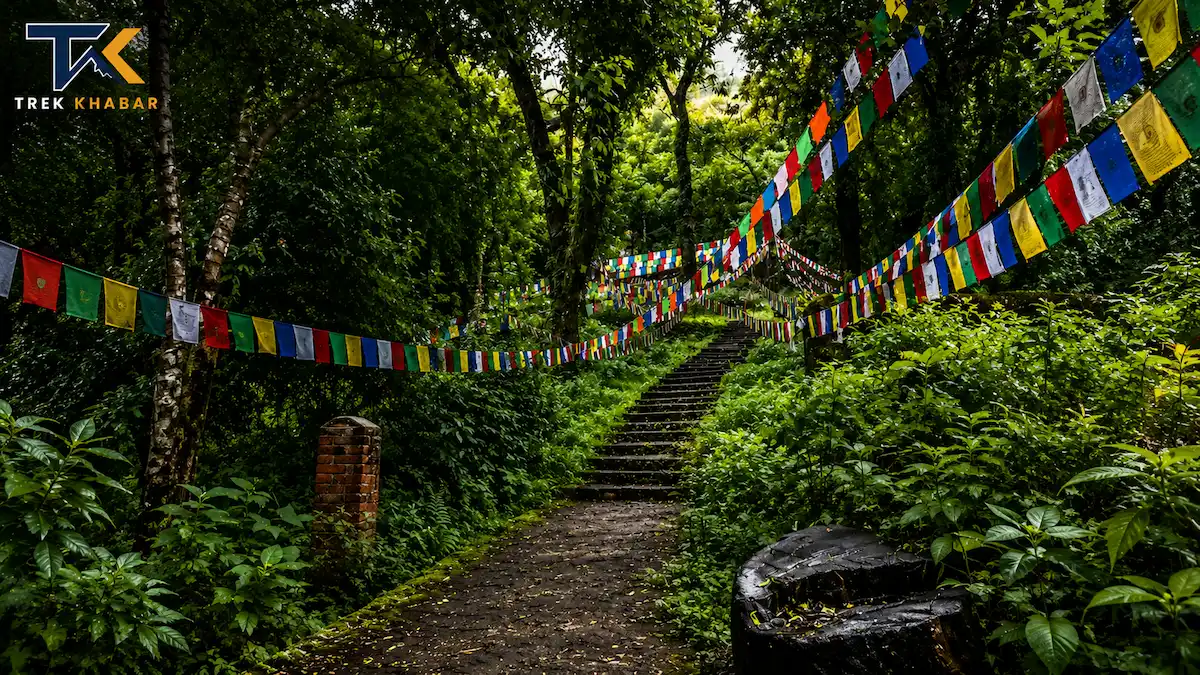
Phulchowki is the highest hill near Kathmandu Valley, standing at roughly 2,762 to 2,782 meters (9,058 to 9,127 feet) above sea level. Located about 14 to 20 kilometers southeast of Kathmandu near Godawari, it’s a full-day, forest-covered hike that rewards hikers with panoramic Himalayan views, over 300 recorded bird species, and one of the last surviving cloud forests in central Nepal. This guide covers everything you need to plan the hike: route, distance, difficulty, best season, and practical tips from the trail.
Quick Answer: Is Phulchowki Hard to Hike?
Phulchowki is rated easy-to-moderate for a full-day hike, though the final ascent is steep enough that some guides classify it as demanding for casual walkers. No technical climbing or prior mountaineering experience is required, and the well-defined trail is manageable for fit teenagers, families, and older hikers who are prepared for several hours of sustained uphill walking on stone steps and switchbacks.
Phulchowki Hike: Key Facts at a Glance
| Detail | Information |
|---|---|
| Starting point | Godawari Bus Stop / Godawari Botanical Garden |
| Max altitude | ~2,762–2,782 m (9,058–9,127 ft) |
| Round-trip distance | 13–18 km, depending on route taken |
| Duration | 5–8 hours round trip (including rest breaks) |
| Difficulty | Easy to moderate; steep final section |
| Elevation gain | Approximately 1,000–1,600 m |
| Best season | October–November and March–April |
| Distance from Kathmandu | ~14–20 km southeast (1–1.5 hr drive) |
What Does “Phulchowki” Mean?
In Nepali, phul means “flower” and chowki refers to a watch post or tollhouse — together, “Hill of Flowers.” The name fits: the hillside is thick with rhododendron, wild rose, and jasmine, and hosts a month-long religious festival at the Phulchowki Mai shrine each spring. The hill is also considered sacred, with the goddess Phulchowki Mai believed to reside at the summit.
Getting to the Trailhead
Most hikers start from Godawari, on the southeastern edge of the Kathmandu Valley. To get there without a private vehicle:
- Take a local bus from Gongabu Bus Park (New Bus Park) to Satdobato.
- From Satdobato, catch a connecting bus to Godawari.
- From Godawari, the trail begins near the bus stop, close to the National Botanical Garden entrance.
Many travelers instead hire a taxi or book a guided day hike, which typically includes round-trip transport from a Kathmandu hotel.
The Trail Route
The standard route runs: Godawari → Kunda → Latta Bhanjyang → summit, with most hikers returning via Nau Dhara on the way down.
- Godawari to lower forest (1,700–1,900 m): The trail starts with concrete stairs before entering dense subtropical forest. This is also where the Godawari Botanical Garden sits, worth a stop if you have time before or after the hike.
- Latta Bhanjyang: A traditional mountain pass roughly at 1,900 m, marked by prayer stones and a common rest point. This altitude band is prime habitat for the spiny babbler, a bird found only in Nepal.
- Prayer flag area: A short distance further, this is one of the most photographed sections of the trail.
- Final ascent: The last stretch, roughly 500–600 vertical meters, is the steepest part of the hike — a series of sharp switchbacks that will test your legs regardless of fitness level.
- Summit: At the top sit an army barracks, telecom towers, and the small Phulchowki Mai temple. On a clear day, the viewpoint looks out over the entire Kathmandu Valley and, further out, the Himalayan skyline — including Ganesh Himal, Langtang Himal, and Gaurishankar.
There is a parallel jeep/motorbike track that crisscrosses the walking trail for most of the route, so hikers who tire out have the option to flag down a passing vehicle for part of the descent.
Best Time to Hike Phulchowki
Autumn (October–November) and spring (March–April) are the best months to hike Phulchowki. Autumn brings the clearest skies and the best odds of a visible Himalayan skyline. Spring is when the rhododendron forest is in full bloom, turning entire hillsides red and pink.
- Monsoon (June–September): The forest is lush and green, but trails get muddy and slippery, and leeches are common.
- Winter (December–February): Phulchowki is one of the few places near Kathmandu that occasionally sees snowfall, a rarity for the valley. The trail can freeze and take longer than usual, so extra caution and grip are needed on the stone steps.
What to Bring
There are no shops along most of the route — only an army-run canteen at the summit and, occasionally, a weekend roadside seller lower down. Pack accordingly:
- At least 1.5–2 liters of water per person
- Snacks or a packed lunch (Note: Please bring all plastic and trash back with you. Making the environment clean is our duty too)
- Sturdy hiking shoes with good grip (the stone steps get slick after rain)
- A light rain jacket, even outside monsoon season
- Sun protection — the forest canopy offers shade for parts of the trail, but the summit area is exposed
- Cash, in case you want tea or snacks at the summit canteen
Entrance Fees and Permits
The good news: no national park permit is required for the Phulchowki hike. The only cost you’ll likely encounter is a small entrance fee at the Godawari Botanical Garden, if your route passes through it. Reported rates vary by source and season, but foreign visitors typically pay in the range of NPR 100–200, with a lower rate for Nepali citizens. Guided packages usually fold this fee into the total price, so independent hikers should simply keep some small cash on hand.
Godawari Botanical Garden: Worth the Extra Stop
Most Phulchowki hikes begin right at the doorstep of the Godawari (National) Botanical Garden, and it’s worth budgeting extra time for it rather than treating it as a pass-through.
- Founded in 1962 with support from the Royal Botanic Garden Edinburgh, and designed by British horticulturists G.A.C. Herklots and Tony Schilling.
- Size: roughly 82 hectares (about 202 acres), sitting at the foot of Phulchowki at around 1,515 m elevation.
- Plant collection: close to 900–1,000 recorded species across angiosperms, gymnosperms, and ferns, including dedicated orchid, fern, rock, Japanese-style, and rare/endangered plant gardens.
- A natural stream, the Godawari, runs through the middle of the garden, feeding several themed sections.
- It’s an internationally recognized garden and member of Botanic Garden Conservation International (BGCI), drawing well over 100,000 visitors a year, including researchers and students, not just tourists.
If you only have energy for one add-on to the main hike, the botanical garden is the easiest and most rewarding — flat walking, clearly labeled plants, and a good option either as a warm-up before the climb or a wind-down after.
Flora, Fauna, and the Cloud Forest Ecosystem
Phulchowki’s forest is part of the reason the hike is so highly rated by nature lovers, not just hikers chasing a summit view.
- Forest zones: As you climb, the vegetation shifts in visible bands. Lower slopes (roughly 1,000–1,800 m) are dominated by subtropical broadleaf evergreen forest, characterized by species such as Schima and Castanopsis. Higher up, you move into pine, oak, laurel, and wild Himalayan cherry, mixed with dense rhododendron. This layered, humid forest is considered one of the last surviving cloud forests in central Nepal, spanning an estimated 50 square kilometers of protected hillside.
- Birdlife: Phulchowki is one of the best-known birding sites in the Kathmandu Valley, with reported sightings of over 300 bird species in the wider Phulchowki–Godawari area — more than a third of all bird species recorded in Nepal. Species hikers and birders regularly report include the Asian barred owlet, great barbet, maroon oriole, grey-headed woodpecker, small niltava, red-billed blue magpie, white-browed shrike-babbler, and fire-tailed sunbird. The hill is also one of the few reliable places to spot the spiny babbler, a bird found nowhere else in the world outside Nepal, most often reported in the mid-altitude broadleaf forest band around Latta Bhanjyang.
- Other wildlife: Guided groups occasionally report barking deer and langur monkeys along the quieter stretches of trail, along with a wide range of butterfly species during the warmer months.
Cultural and Religious Significance
Phulchowki isn’t just a nature hike — it’s a living pilgrimage site. The summit is home to the Phulchowki Mai temple, dedicated to the goddess believed to reside on the hill. Local devotees hike up regularly to pay respects, and the site draws larger crowds during a month-long annual festival held in spring, as well as on full-moon days in July and August. If you’re hiking during one of these periods, expect more foot traffic on weekends and a more festive atmosphere near the summit shrine. Lower down the route, sites like Godawari Kunda and the Naudhara springs are also treated as sacred stops by many local hikers, worth a short detour if you have time.
Sample Hiking Itinerary
A realistic full-day plan for an independent or lightly guided hike:
| Time | Activity |
|---|---|
| 6:30–7:00 AM | Depart Kathmandu for Godawari (allow 1–1.5 hrs by road) |
| 8:00 AM | Arrive Godawari, pay garden entrance fee if applicable, begin hike |
| 8:00–9:30 AM | Ascend through lower broadleaf forest |
| 9:30–10:00 AM | Rest at Latta Bhanjyang; watch for spiny babbler and other forest birds |
| 10:00–11:30 AM | Steep final switchback section to the summit |
| 11:30 AM–12:30 PM | Summit views, Phulchowki Mai temple, lunch/snack break |
| 12:30–2:30 PM | Descend, typically via the Nau Dhara route |
| 2:30–3:00 PM | Optional stop at Godawari Botanical Garden |
| 3:30–4:30 PM | Return drive to Kathmandu |
Adjust generously for group size, fitness level, and how long you linger at viewpoints — many hikers stretch this into a 9-to-10-hour day rather than rushing it.
Safety Notes
- Wildlife and plant protection: Phulchowki sits within a protected forest area; removing plants, disturbing wildlife, or leaving litter is discouraged and, in parts of the reserve, formally restricted.
- Trail conditions change with weather: stone steps get slick in rain and can ice over in winter, so check recent trail reports before a monsoon or winter hike.
- No cell reception in parts of the forest: let someone know your plan if hiking independently, and consider joining others on busier weekend days rather than hiking solo on quiet weekdays.
- Start early: afternoon cloud buildup is common, and starting late risks descending in fading light given the 5–8 hour round trip.
Frequently Asked Questions
Question: How long does the Phulchowki hike take?
Answer: Most hikers complete the round trip in 5 to 8 hours, including rest stops. Faster, fitter hikers can finish closer to 4–5 hours; beginners or larger groups often take the full 7–8 hours.
Question: How far is Phulchowki from Kathmandu?
Answer: Phulchowki is about 14 to 20 kilometers southeast of central Kathmandu, near Godawari. By car, it’s roughly a 1 to 1.5-hour drive from most parts of the city.
Question: Do I need a guide to hike Phulchowki?
Answer: A guide isn’t strictly required — the trail is well-defined and a popular route for independent hikers. That said, a local guide adds value for bird and plant identification, since Phulchowki is known for over 300 bird species, and can help with route-finding if you take one of the shortcut trails that split off the main path.
Question: Is Phulchowki suitable for beginners?
Answer: Yes, with realistic expectations. The trail requires no technical skill, but it’s a sustained, several-hour uphill walk with one genuinely steep final section. Beginners should plan for a full day, take breaks, and start early.
Question: What can you see from the top of Phulchowki?
Answer: On a clear day, the summit offers a 360-degree view of the entire Kathmandu Valley and a distant Himalayan skyline that can include Everest, Annapurna, Langtang, Ganesh Himal, and Gaurishankar. Visibility is best in autumn; monsoon and hazy winter days can obscure the mountains entirely.
Question: Does it snow on Phulchowki?
Answer: Occasionally. As the highest point on the valley rim, Phulchowki sometimes receives light snowfall in January or February — a rare event for the Kathmandu Valley — though it isn’t guaranteed every winter.
Question: Is there an entrance fee for the Phulchowki hike?
Answer: No park permit is needed for the hike itself. The only common cost is a small entrance fee at the Godawari Botanical Garden, generally in the range of NPR 100–200 for foreign visitors, if your route passes through it.
Question: Is Phulchowki good for birdwatching?
Answer: Yes — it’s considered one of the best birding spots in the Kathmandu Valley, with over 300 recorded species in the wider Phulchowki–Godawari area, including Nepal’s endemic spiny babbler. Many birders visit specifically for a dawn birding walk rather than to reach the summit.
Question: Should I visit the Godawari Botanical Garden as part of the hike?
Answer: It’s a worthwhile add-on if you have the time. The garden sits at the trailhead, spans about 82 hectares, and holds close to 1,000 plant species, making it an easy, flat complement to the steeper forest hike above it.
Final Tips
Phulchowki rewards an early start: mornings tend to have clearer skies before valley haze builds up later in the day. Combine the hike with a stop at the Godawari Botanical Garden if you have an extra hour, and check recent trip reports before you go, since trail conditions shift with the seasons — especially after monsoon rains or winter frost.
