


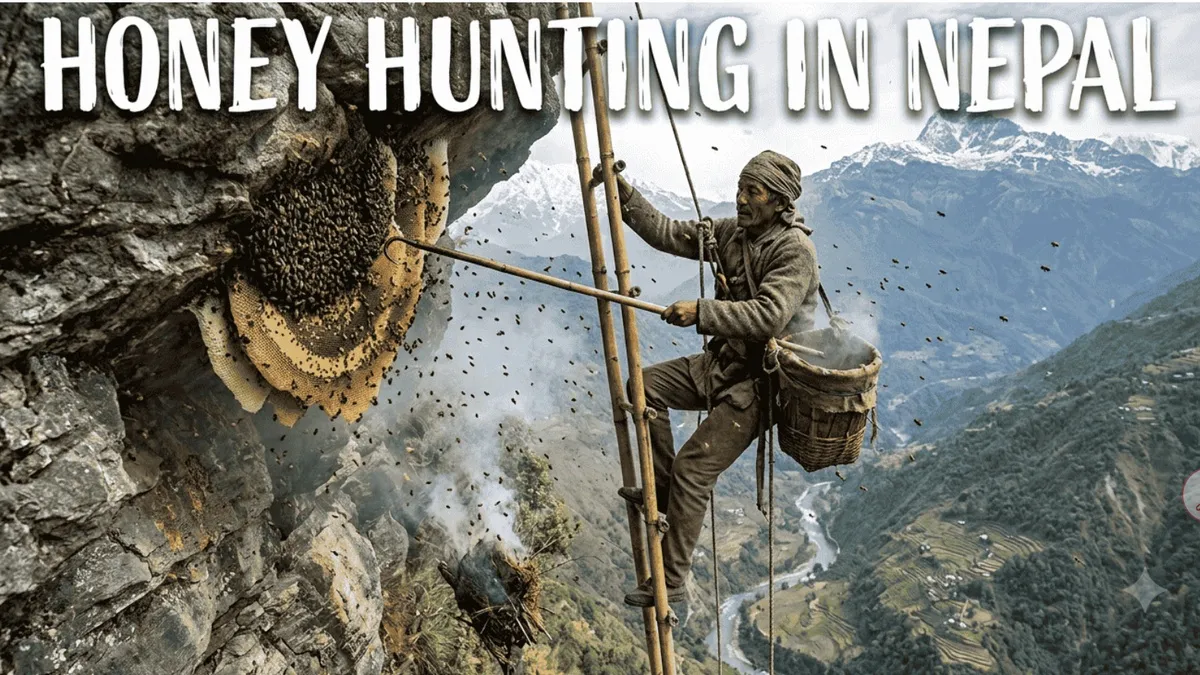
Every spring and autumn, high in Nepal’s Himalayan cliffs, skilled honey hunters risk their lives collecting one of the world’s rarest natural product known as the famous mad honey.
Using handmade rope ladders suspended hundreds of feet above the ground, hunters descend vertical cliffs surrounded by thousands of aggressive giant Himalayan bees. Armed with little more than bamboo poles, woven baskets, and smoking torches, they harvest crimson-colored honey that has fascinated travelers, scientists, and traditional healers for centuries.
Known locally as “red honey,” this unique honey contains naturally occurring grayanotoxins, compounds that originate from the nectar of wild rhododendron flowers. Unlike ordinary honey, mad honey has long been valued in Himalayan communities for its traditional medicinal uses and its distinctive psychoactive properties.
Today, mad honey hunting represents much more than collecting honey—it’s a remarkable blend of cultural heritage, survival skills, ecological knowledge, and sustainable harvesting practices passed down through generations.
What Is Mad Honey?
Mad honey is unlike any ordinary honey found in supermarkets. It is produced naturally in the Himalayan mountains when giant honey bees collect nectar from certain rhododendron flowers containing naturally occurring grayanotoxins. The result is a rare wild honey that has been treasured by local communities for centuries because of its unique composition and traditional uses.
Mad honey is produced primarily by the Himalayan giant honey bee (Apis laboriosa), the world’s largest honey bee species.
Unlike commercial honey, mad honey contains small amounts of naturally occurring grayanotoxins, which bees collect while foraging on certain rhododendron species that bloom across the Himalayan forests.
These compounds can produce effects ranging from:
- Mild relaxation
- Warm body sensation
- Temporary dizziness
- Lower blood pressure
- Altered perception (in larger amounts)
For centuries, Himalayan communities have traditionally used mad honey in very small quantities for wellness purposes, though excessive consumption can cause poisoning and should be avoided.
Why Nepal Is Famous for Mad Honey Hunting
Nepal is internationally recognized as the heart of traditional mad honey hunting because its rugged Himalayan landscape provides the perfect environment for giant cliff-nesting bees. The country’s rich biodiversity, high-altitude forests, and indigenous communities have preserved this extraordinary practice for generations. These unique natural and cultural factors make Nepal one of the few places where authentic mad honey can still be harvested using traditional methods.
Nepal offers one of the few places on Earth where all the essential ingredients naturally come together.
These include:
- Massive Himalayan cliffs
- Dense rhododendron forests
- Ideal mountain climate
- The Himalayan giant honey bee
- Indigenous honey-hunting traditions
Regions such as Lamjung, Kaski, Myagdi, Rukum, Rolpa, Gorkha, and Dolpa remain internationally recognized for preserving this ancient practice.
The Gurung Honey Hunters
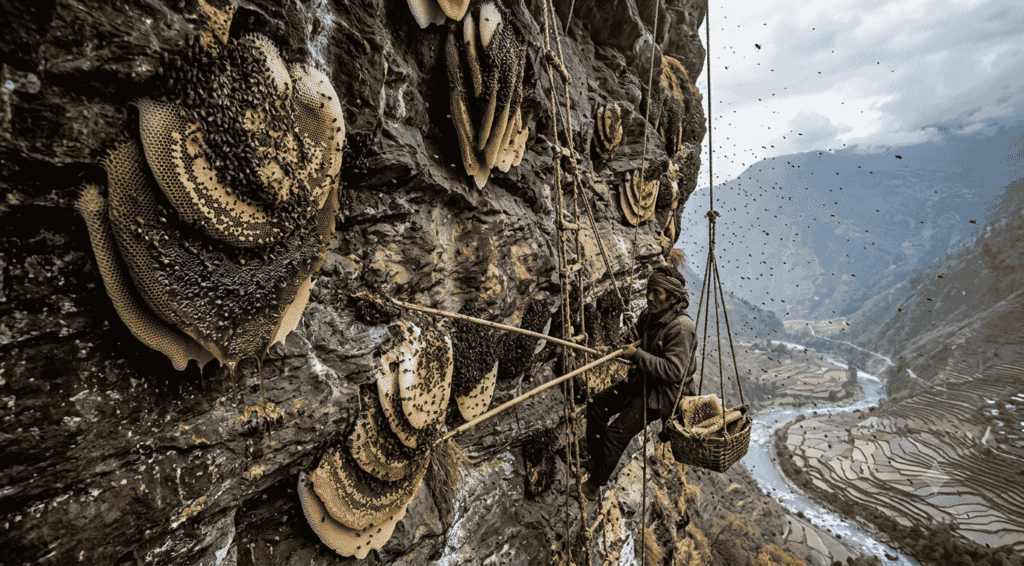
The Gurung community has become synonymous with Nepal’s traditional mad honey hunting culture. Their knowledge of mountain ecosystems, bee behavior, and cliff-harvesting techniques has been passed down through generations without formal written instruction. Every successful expedition reflects centuries of experience, teamwork, and respect for nature.
Among Nepal’s many ethnic communities, the Gurung people are the most widely known for traditional cliff honey hunting.
Mad Honey hunting is much more than a way to earn an income. It remains an important cultural tradition that strengthens community bonds and preserves ancestral knowledge.
For the Gurung people, honey hunting represents:
- A community event
- A seasonal tradition
- A spiritual ritual
- A source of livelihood
- A cultural identity
Before each expedition, many villages perform blessings seeking protection from mountain spirits and safe harvesting.
The Himalayan Giant Honey Bee
No discussion of mad honey would be complete without understanding the remarkable bee responsible for producing it. The Himalayan giant honey bee is specially adapted to survive at extreme altitudes where few other bee species can thrive. Its size, nesting behavior, and defensive instincts make it one of the most fascinating pollinators in the world.
The star of every honey hunt is Apis laboriosa, the world’s largest honey bee species.
Unlike domesticated honey bees, these bees build massive exposed combs beneath towering Himalayan cliffs where they remain protected from predators and harsh weather.
Characteristics
The Himalayan giant honey bee possesses several unique characteristics that distinguish it from ordinary honey bees. These adaptations enable it to survive in harsh mountain environments while producing the rare wild honey that has made Nepal famous. Understanding these traits helps explain why mad honey cannot be commercially farmed.
Its defining characteristics include:
- World’s largest honey bee
- Builds a single enormous comb
- Nests beneath overhanging cliffs
- Lives between 2,500 and 4,000 meters
- Highly defensive
- Excellent high-altitude flyer
Some colonies create combs measuring over one meter wide.
Unlike domesticated honey bees, these colonies cannot be farmed commercially, making every harvest a wild collection.
How Mad Honey Hunting Works
Mad honey hunting follows a carefully organized process that has remained largely unchanged for centuries. Every member of the hunting team has a specific role, and success depends on coordination, patience, and experience. Although the techniques appear simple, they require years of practice to master safely.
The traditional harvesting process usually follows these steps.
Step 1: Finding the Colonies
Before any harvest begins, experienced hunters spend time locating active bee colonies along remote Himalayan cliffs. Their knowledge of seasonal migration patterns and flowering cycles helps them identify the best harvesting locations.
Hunters scout remote cliffs where bee colonies have nested. Knowledge of these locations is carefully preserved within local communities.
Step 2: Preparing Equipment
Traditional tools are carefully prepared before each expedition to ensure the safety of the hunters. Most equipment is handmade using natural materials that have been relied upon for generations.
The equipment typically includes:
- Bamboo ladder steps
- Hemp or Jute rope
- Woven Bamboo baskets
- Long bamboo harvesting poles
- Smoking torches
- Protective clothing
Step 3: Lowering the Hunter
Once preparations are complete, the most experienced hunter begins the dangerous descent down the cliff face. Team members at the top carefully control the ropes while maintaining constant communication throughout the harvest.
One experienced hunter descends the cliff while teammates anchor ropes from above. The descent may exceed 100 meters.
Step 4: Smoking the Bees
Smoke plays a crucial role in reducing the bees’ defensive behavior during harvesting. The goal is to calm the colony without causing unnecessary harm or contaminating the honey.
Proper smoke control is essential because:
- It encourages bees to move away from the comb.
- It reduces aggressive attacks.
- It helps preserve honey quality.
- It minimizes damage to the colony.
Step 5: Cutting the Honeycomb
After the bees move away, the hunter carefully slices sections of honeycomb using a specially designed bamboo pole with a blade attached. Precision is important because only mature combs should be harvested while allowing the colony to recover.
Using long bamboo poles fitted with blades, the hunter carefully cuts the comb, allowing it to fall into baskets waiting below.
Step 6: Returning Safely
The final stage of the expedition is often just as dangerous as the descent. Hunters must carefully climb back to the top while carrying heavy baskets filled with freshly harvested honeycomb.
Once harvesting is complete, the hunter climbs back up while carrying baskets filled with wild honey.
Why Is Mad Honey So Dangerous to Collect?
Mad honey hunting is widely considered one of the world’s most dangerous traditional occupations. Hunters face multiple life-threatening hazards during every expedition, requiring courage, experience, and teamwork. Even a small mistake can have serious consequences.
The primary dangers include:
- Massive Heights
- Hunters often work hundreds of feet above rocky valleys where a fall could be fatal.
- Giant Honey Bees
- Thousands of defensive bees may attack simultaneously when disturbed.
- Unpredictable Weather
- Mountain weather can change within minutes, creating dangerous winds, rain, or poor visibility.
- Heavy Equipment
Hunters must manage ropes, baskets, smoke, and cutting tools while suspended from handmade ladders.
Why Is the Honey Red?
One of the most distinctive features of mad honey is its rich amber to reddish color. The exact shade varies depending on the flowering season, the types of rhododendrons visited by the bees, and the surrounding environment. This natural variation makes every harvest unique.
The color of mad honey is influenced by several factors:
- Rhododendron species
- Flowering season
- Nectar concentration
- Altitude
- Mineral content
Spring harvests generally contain higher concentrations of grayanotoxins than autumn harvests.
The Role of Rhododendrons
Rhododendron forests play a vital role in the production of authentic Himalayan mad honey. Without these flowering plants, the honey would not develop its unique chemical composition or distinctive properties. Their seasonal blooms determine both the availability and potency of each harvest.
Several rhododendron species contribute to mad honey production because they contain naturally occurring grayanotoxins in their nectar.
Key influences include:
- Species diversity
- Blooming season
- Altitude
- Climate
- Nectar availability
Traditional Uses of Mad Honey
For generations, local Himalayan communities have used mad honey as part of their traditional wellness practices. Although modern science continues to study these uses, many families still value the honey for its cultural significance and historical role in folk medicine. So if you are wondering why the hunter is putting his life at risk while making so little earning for mad honey hunting it’s tied up with cultural and traditional aspect too.
Traditional uses commonly include:
- Easing sore throats
- Supporting digestion
- Relieving fatigue
- Warming the body during winter
- Ceremonial use
- Traditional wellness practices
What Does Mad Honey Taste Like?
Mad honey offers a flavor that is very different from ordinary commercial honey. Its taste reflects the wild Himalayan flowers from which it is produced, creating a complex profile appreciated by experienced honey enthusiasts. The slight bitterness is one of its most recognizable characteristics.
Many people describe its flavor as:
- Floral
- Earthy
- Slightly bitter
- Herbal
- Rich
- Complex
Is Mad Honey Hunting Sustainable?
Traditional honey hunters have long understood the importance of protecting bee colonies for future harvests while keeping an ethical mad honey hunting in practice. Responsible harvesting techniques allow colonies to recover naturally while preserving the surrounding ecosystem. However, increasing global demand has created new conservation challenges.
Major concerns include:
- Overharvesting
- Habitat loss
- Climate change
- Declining bee populations
- Unsustainable tourism
Supporting ethically sourced honey helps protect both local communities and Himalayan biodiversity. Also Mad Honey Hunting is a unique mystery to the world.
Can Tourists Experience Mad Honey Hunting?
Mad honey hunting has become one of Nepal’s most unique adventure tourism experiences. Visitors from around the world travel to remote Himalayan villages to witness this centuries-old tradition firsthand. While no expedition can guarantee a successful harvest, the cultural experience alone is unforgettable.
Tour packages often include:
- Guided trekking
- Village homestays
- Cultural interaction
- Observation of honey hunting
- Local cuisine
- Education about Himalayan ecology
Because the harvest depends on weather and bee activity, sightings cannot be guaranteed. If you want to join the Mad Honey Hunt expedition Trekkhabar is just one call or email away.
Is Mad Honey Legal?
Mad honey is generally legal to harvest and sell within Nepal under applicable regulations. Export requirements vary depending on the destination country, and some countries have specific food safety or import regulations. Anyone planning to purchase or transport mad honey internationally should check local laws before traveling. Also, it is legal to join the Mad Honey Hunting Team as a part of the expedition as long as you comply by the rules of the party.
Frequently Asked Questions
Mad honey hunting often raises questions from travelers, researchers, and first-time buyers who are curious about this remarkable Himalayan tradition. The answers below address some of the most common questions about the harvesting process, the bees, and the honey itself.
Why is it called mad honey?
The name comes from the intoxicating effects that excessive consumption may produce due to naturally occurring grayanotoxins.
How often is honey harvested?
Most traditional communities harvest twice each year during the spring and autumn flowering seasons.
Which bee makes mad honey?
Mad honey is produced primarily by the Himalayan giant honey bee (Apis laboriosa).
Is every batch equally strong?
No. Potency varies depending on season, altitude, weather, and the rhododendron species visited by the bees.
Can you farm mad honey?
No. Mad honey is harvested exclusively from wild cliff-nesting bee colonies and cannot currently be produced through conventional commercial beekeeping.
Preserving a Living Himalayan Tradition
Mad honey hunting in Nepal is far more than an adventurous spectacle—it is a living expression of the country’s cultural heritage, ecological knowledge, and deep relationship with nature. As global interest in mad honey continues to grow, protecting the Himalayan giant honey bee, preserving traditional harvesting techniques, and supporting local communities have become increasingly important. By promoting ethical sourcing and sustainable tourism, future generations can continue to witness and benefit from one of Nepal’s most extraordinary traditions
References
https://en.wikipedia.org/wiki/Mad_honey
