


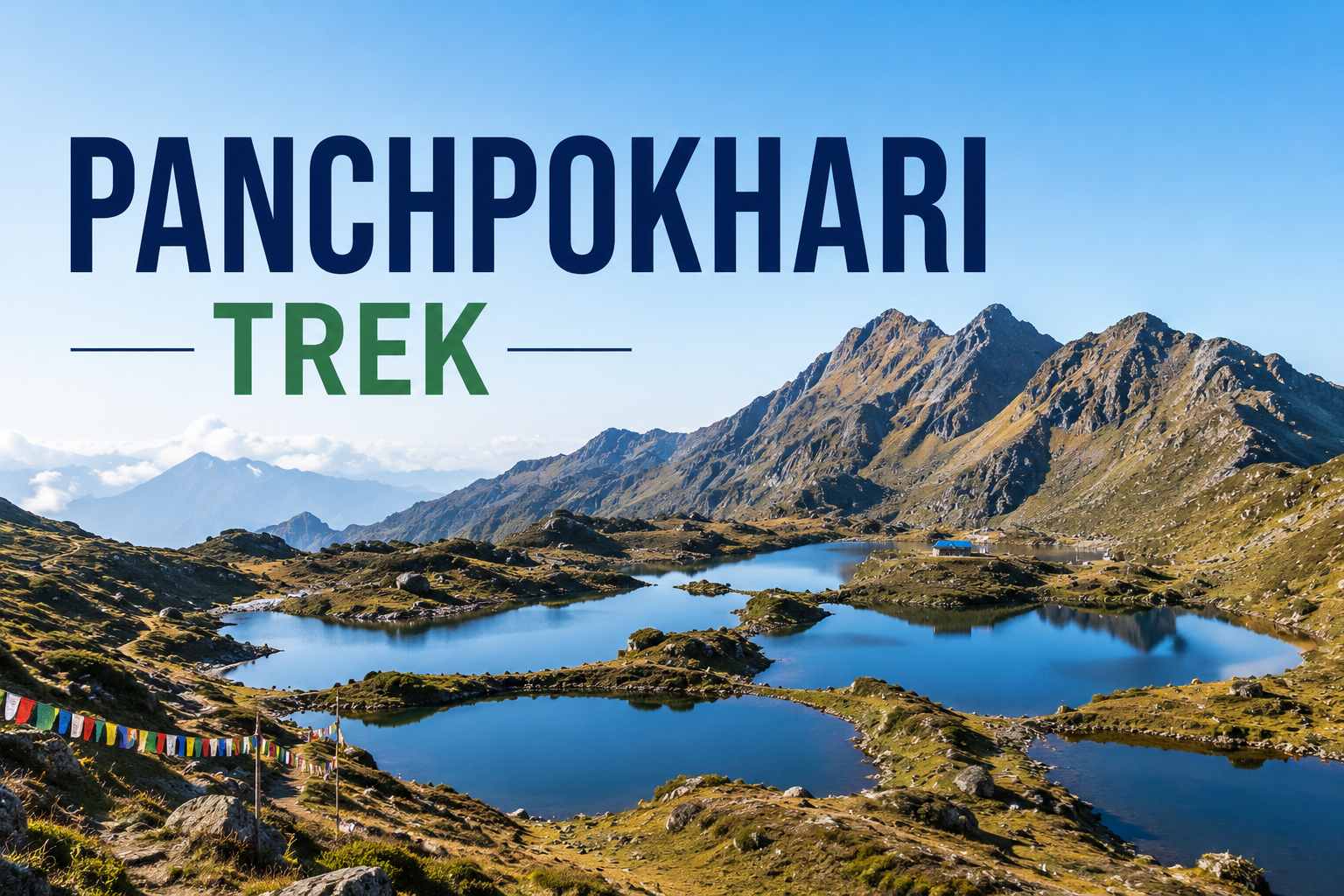
The Panch Pokhari Trek is one of Nepal’s most rewarding off-the-beaten-path trekking experiences, taking you to a sacred group of five alpine lakes at around 4,100 meters above sea level in Sindhupalchok district. The name Panch Pokhari literally means “five ponds” or “five lakes,” and the destination holds deep religious significance for Hindu and Buddhist communities.
Unlike the heavily trafficked Everest Base Camp trek, Annapurna Circuit, and Langtang Valley trails, Panch Pokhari offers a quieter Himalayan experience. The journey combines terraced hillsides, Tamang villages, rhododendron and pine forests, alpine meadows, rugged ridges, mountain views, and the dramatic landscape surrounding the five sacred lakes.
The trek is particularly attractive to travelers who want a relatively short Himalayan adventure close to Kathmandu without sacrificing altitude, scenery, culture, or a genuine sense of remoteness. It is also an important pilgrimage destination, becoming especially lively around Janai Purnima, when devotees travel to the lakes for ritual bathing and worship. Nepal Tourism Board material also identifies Panch Pokhari among Nepal’s important high altitude religious lakes and notes its popularity during Janai Purnima in August.
What Is Panch Pokhari?
Panch Pokhari is a cluster of five sacred high altitude lakes situated in the Jugal Himalayan region of Sindhupalchok, northeast of Kathmandu. The lakes sit at approximately 4,100 meters, surrounded by high ridges and Himalayan peaks.
The destination is not simply a trekking viewpoint. For generations, the lakes have been associated with religious traditions, pilgrimage, local beliefs, and seasonal festivals. The surrounding area is also culturally significant, with Tamang communities living in the lower and middle sections of the trekking region.
The combination of natural scenery and spiritual importance is what makes Panch Pokhari different from many other short treks in Nepal.
Panch Pokhari Trek at a Glance
Before planning the trek, it helps to understand the basic characteristics of the route. The exact duration varies according to the starting point, road conditions, itinerary, walking pace, and whether you return by the same trail or combine the trek with another route.
| Trek Feature | Details |
|---|---|
| Destination | Panch Pokhari |
| Location | Sindhupalchok, Nepal |
| Region | Jugal Himal |
| Highest Point | Approximately 4,100 m |
| Meaning | Five Lakes |
| Trek Type | High altitude cultural and nature trek |
| Difficulty | Moderate to challenging |
| Typical Duration | Around 4 to 8 days depending on itinerary |
| Starting Point | Commonly Bhotang or routes accessed through Melamchi/Chautara |
| Nearest Major City | Kathmandu |
| Main Attractions | Five sacred lakes, Himalayan views, forests, villages and culture |
| Major Mountain Range | Jugal Himal |
| Important Festival | Janai Purnima |
| Best Seasons | Spring and autumn |
| Accommodation | Basic lodges, shelters and camping depending on route |
| Maximum Altitude | Around 4,100 m |
Panch Pokhari is particularly appealing because the trek can be reached by road from Kathmandu rather than requiring a domestic flight. Nepal’s tourism authorities describe trekking as one of the country’s defining visitor activities, with trails ranging from lower mountain environments to routes exceeding 5,000 meters.
Where Is Panch Pokhari Located?
Panch Pokhari is located in Sindhupalchok District of Bagmati Province, northeast of Kathmandu. The lakes are situated in the Jugal Himalayan area at an altitude of approximately 4,100 meters.
Geographically, the destination lies relatively close to Kathmandu, but the mountainous terrain makes the journey considerably longer than the straight-line distance might suggest. This combination of proximity and remoteness is one of the trek’s biggest attractions.
The Panch Pokhari area is associated with the upper Indrawati watershed and sits among the mountains of the Jugal Himal. On clear days, trekkers can see impressive Himalayan peaks and ridgelines surrounding the lake basin.
Panch Pokhari Altitude
The Panch Pokhari altitude is approximately 4,100 meters (13,450 feet) above sea level. This is high enough for altitude sickness to become a genuine concern, even though Panch Pokhari is not a technical mountaineering destination.
Altitude is one of the most important factors to consider when planning this trek. Your body needs time to adjust as you move from Kathmandu’s relatively low elevation through the middle hills and eventually into the alpine environment.
The gradual nature of the route can help with acclimatization, but trekkers should never assume that a short trek is automatically an easy trek. At 4,100 meters, weather can change quickly, temperatures can drop significantly, and symptoms of acute mountain sickness can develop in otherwise fit travelers.
Why Panch Pokhari altitude matters
The most common altitude related symptoms include headache, unusual fatigue, dizziness, nausea, reduced appetite, and difficulty sleeping. Mild symptoms should be taken seriously rather than ignored.
The safest approach is to ascend gradually, drink enough fluids, avoid excessive alcohol, maintain a comfortable walking pace, and allow your body to adjust. If symptoms become severe or worsen after resting, descending to a lower elevation is more important than completing the itinerary.
Panch Pokhari Trek Difficulty
The Panch Pokhari Trek is generally considered moderate to challenging, depending on the route and itinerary. It does not involve technical climbing, ropes, glaciers, or mountaineering skills, but the altitude, steep sections, long walking days, and limited infrastructure make it more demanding than an ordinary hill hike.
A reasonably fit person who regularly walks, hikes, or exercises can prepare for the trek. Previous high altitude trekking experience is helpful but not absolutely necessary if you choose a sensible itinerary and travel with appropriate support.
The biggest challenge is not simply distance. The combination of continuous elevation gain, uneven trails, cold conditions, basic accommodation, and altitude makes the upper section considerably more demanding.
Who can do the Panch Pokhari Trek?
The trek can suit:
- Experienced trekkers looking for a quieter Himalayan route
- Beginners with good physical preparation
- Travelers interested in religious and cultural destinations
- Photographers and nature lovers
- Visitors with limited time who still want a high altitude trek
- People looking for trekking routes close to Kathmandu
- Pilgrims visiting during Janai Purnima
People with limited hiking experience should not underestimate the altitude simply because Panch Pokhari is a shorter trek than Everest Base Camp.
Panch Pokhari Trek Route
The Panch Pokhari trekking route has several variations depending on where you begin and how you organize transportation. A commonly used approach goes through the Melamchi and Bhotang side before climbing toward the lake basin.
A representative route is:
Kathmandu → Melamchi → Bhotang/Chhimti → Deurali → Tupi Danda → Nosyangpati → Panch Pokhari
Local sources identify the Bhotang to Nosyangpati to Panch Pokhari route as one of the established approaches. Another commonly described route passes through Melamchi, Tipeni, Thangpaldhap, Manikharka, Chhimti, Deurali, Tupi Danda and Nosyangpati before reaching the lakes.
Because road construction and local transportation conditions can change, your exact trailhead may differ from an itinerary published several years ago.
Kathmandu to Melamchi
The journey begins with a drive from Kathmandu toward Melamchi. This section takes you away from the urban environment and into the middle hills of Sindhupalchok.
The landscape gradually changes from dense settlement to agricultural terraces, hill villages, forests and mountain roads. Road conditions can vary considerably, particularly during and immediately after the monsoon.
Melamchi to the trailhead
From Melamchi, the journey continues toward the trekking starting area. Depending on the itinerary and road conditions, trekkers may begin walking around Chhimti, Bhotang, or another nearby roadhead.
This road section is important when planning the trek because the exact walking distance can change depending on where the vehicle can travel.
Bhotang to Deurali
Once the walking section begins, the trail climbs through traditional settlements and forested hills. The environment becomes increasingly rural as you move away from the road.
The lower portion of the trek is particularly rewarding for travelers interested in village life, terraced agriculture, local architecture, and the culture of the communities living in the hills.
Deurali to Tupi Danda
The trail continues upward through forests and ridges. The scenery begins to change as the elevation increases and the landscape becomes more alpine.
This is where the physical nature of the trek becomes more obvious. The trail contains sustained climbs, so maintaining a slow and consistent pace is more useful than trying to walk quickly.
Tupi Danda to Nosyangpati
Nosyangpati is one of the important high points and overnight areas on the approach to Panch Pokhari. Sources place Nosyangpati at roughly 3,650 meters, with basic accommodation facilities available in the area.
The environment here is noticeably different from the lower hills. Forest becomes thinner, open mountain landscapes become more prominent, and the surrounding Himalayan scenery begins to dominate the horizon.
Nosyangpati to Panch Pokhari
The final ascent takes you toward the sacred lake basin at approximately 4,100 meters. This is the section where the trek truly transforms into a high Himalayan experience.
After several days of walking through villages and forests, arriving at the five lakes provides a dramatic contrast. The combination of alpine terrain, prayer flags, mountain ridges and the tranquil waters creates one of the most memorable moments of the trek.
Panch Pokhari Trek Itinerary
There is no single official itinerary for Panch Pokhari. Different trekking companies and independent groups use different starting points, walking distances and return routes.
For a comfortable trip, allowing around 5 to 8 days is sensible depending on transportation and whether you want extra time at the lakes. A shorter itinerary is possible with favorable road conditions and longer walking days.
Day 1: Kathmandu to Melamchi or trekking area
Begin with a road journey from Kathmandu toward Sindhupalchok. Depending on your chosen itinerary, you may continue toward the trailhead or stay overnight along the approach.
Use this day to organize your equipment and conserve energy for the walking section.
Day 2: Trailhead to Deurali
Begin trekking through villages, farmland and forest. The trail gradually gains elevation.
This is an excellent day to settle into your walking rhythm rather than rushing toward the destination.
Day 3: Deurali to Tupi Danda or nearby camp
Continue through increasingly elevated terrain. Forests, ridges and mountain scenery become more prominent.
The walking can become physically demanding, particularly if you are carrying your own backpack.
Day 4: Tupi Danda to Nosyangpati
The trail continues toward Nosyangpati. At around 3,650 meters, this is an important altitude gain and a point where trekkers should pay close attention to how their bodies are responding.
An early night is usually worthwhile because the next day takes you toward the lakes.
Day 5: Nosyangpati to Panch Pokhari
This is the highlight of the trek. Continue toward the five sacred lakes at approximately 4,100 meters.
Once you reach Panch Pokhari, spend time exploring the lake area, enjoying the mountain panorama, photographing the landscape, and experiencing the spiritual atmosphere.
Day 6: Panch Pokhari exploration and descent
Depending on your itinerary, you can enjoy sunrise around the lakes before beginning the descent.
Descending is usually easier on the lungs than ascending, but steep downhill sections can put considerable strain on the knees.
Day 7: Return toward the roadhead
Continue descending through the forest and hill settlements.
The lower altitude and warmer temperatures usually make this section feel considerably easier.
Day 8: Return to Kathmandu
Complete the final road journey back to Kathmandu.
The exact number of days can be reduced or extended depending on transportation, fitness, weather and the chosen route.
Best Time to Visit Panch Pokhari
The best time to visit Panch Pokhari is generally spring and autumn, particularly when stable weather and clearer mountain views are priorities.
For trekking in Nepal more broadly, the Nepal Tourism Board recommends September to November and February to May, when daytime weather is generally favorable and nighttime temperatures are less severe than in the colder months.
For Panch Pokhari specifically, March to May and September to November are commonly preferred because of the combination of manageable temperatures, clearer skies, blooming vegetation in spring, and improved mountain visibility.
Panch Pokhari in spring
Spring is one of the most attractive periods for the trek. Rhododendron forests begin to bloom, temperatures become more comfortable, and the mountain landscape can be exceptionally scenic.
March can still bring cold conditions at higher elevations, while April and May generally offer increasingly pleasant trekking conditions.
Panch Pokhari in autumn
Autumn is arguably the most reliable season for mountain visibility. After the monsoon, the atmosphere often becomes clearer, allowing better views of the Jugal Himal and surrounding peaks.
September can still experience some residual monsoon weather, while October and November are generally excellent months for trekking.
Panch Pokhari in winter
Winter brings significantly colder conditions. Snow can affect the upper sections, and the lakes may partially freeze.
Experienced trekkers equipped for winter conditions can potentially visit, but winter is not the easiest season for a first-time visitor.
Panch Pokhari during monsoon
The monsoon months bring heavy rainfall to many parts of Nepal. Trails can become muddy and slippery, landslides can affect roads, clouds can obscure mountain views, and transportation can become unpredictable.
However, the monsoon period is also associated with the important Janai Purnima pilgrimage season, meaning the cultural experience can be very different from a normal trekking visit.
Panch Pokhari Weather
Panch Pokhari weather changes rapidly because of its elevation. Conditions in Kathmandu, Melamchi, and the lower trail can be completely different from conditions around the lakes.
At 4,100 meters, trekkers should be prepared for cold mornings, strong winds, cloud changes, rain or snow depending on the season, and very cold nights.
A clear morning can transform into cloudy or windy conditions within a short period, which is why packing for multiple weather conditions is essential.
Panch Pokhari weather by season
| Season | General Conditions | Trekking Experience |
| Spring | Mild lower elevations, cold at high altitude | Excellent |
| Summer/Monsoon | Rain, clouds and muddy trails | Challenging |
| Autumn | Clear skies and stable weather | Excellent |
| Winter | Very cold, possible snow | Difficult |
Weather should always be checked shortly before departure rather than relying solely on seasonal averages.
Panch Pokhari Festival
The most important festival associated with Panch Pokhari is Janai Purnima, a major Hindu festival observed during the full moon in the month of Shrawan, usually falling in August.
During this period, pilgrims travel to Panch Pokhari to bathe in the sacred waters and perform religious rituals. Nepal’s official tourism material specifically identifies Panch Pokhari as a destination that attracts large numbers of devotees during Janai Purnima.
The festival creates a completely different atmosphere from the quieter trekking season. The trail becomes more culturally vibrant, with pilgrims, religious activities, temporary facilities and traditional celebrations.
Why Janai Purnima is important at Panch Pokhari
For Hindu pilgrims, bathing in the sacred lake is associated with spiritual purification and religious devotion. The journey itself is part of the pilgrimage experience.
The surrounding Tamang communities also contribute to the cultural character of the festival. Government tourism information notes traditional performances and local practices associated with the celebration, including dances and ritual traditions.
If your primary goal is mountain photography and peaceful trekking, the regular spring or autumn season may be preferable. If your goal is cultural immersion and pilgrimage, visiting around Janai Purnima can provide a much more distinctive experience.
Panch Pokhari Trek Cost
The total Panch Pokhari Trek cost depends heavily on whether you travel independently or with a guide, the size of your group, transportation, accommodation, food, permits, equipment rental, and the number of trekking days.
A basic local trip can be considerably cheaper than a fully organized private trek. On the other hand, a professionally organized itinerary with private transportation, guides, porters, accommodation and equipment can cost substantially more.
Your main expenses will normally include:
- Kathmandu accommodation
- Road transportation
- Guide or porter
- Food and accommodation
- Trekking permits and applicable fees
- Sleeping bag or equipment rental
- Insurance
- Emergency transportation
- Personal expenses
- Tips
- Additional accommodation caused by weather or road delays
Because local fees, transportation prices and trekking regulations can change, it is better to confirm the current cost immediately before booking rather than relying on an old fixed price.
Panch Pokhari Trek Permits
Permit requirements can depend on the exact route used, and this is an area where trekkers should verify current regulations before departure.
Some current trekking sources list TIMS and a Langtang National Park entry permit for Panch Pokhari, while route information also identifies Panch Pokhari within the wider Langtang area. Current government documentation describes Panch Pokhari as one of the features of Langtang National Park.
Because permit rules and fees can change, confirm the latest requirements with the Nepal Tourism Board, the relevant park office, or a registered trekking agency before starting the trek.
TIMS card
The Trekkers’ Information Management System, commonly known as TIMS, is used to register trekkers and support trekking safety and monitoring.
The exact requirements and fee structure can change, so travelers should verify the current rules before departure.
National park entry permit
If your selected route enters the relevant protected area, you will need the appropriate entry permit.
Do not assume that a permit requirement from an older itinerary automatically applies to your current route. The route you actually use matters.
Accommodation During the Panch Pokhari Trek
Accommodation is much more basic than on popular trekking routes such as Everest Base Camp or parts of the Annapurna region.
Lower villages may have simple lodges or homestay style accommodation, while higher sections can have basic shelters or camping arrangements. Around the lake area, facilities are particularly limited compared with established trekking hubs.
This is one reason Panch Pokhari is best approached with realistic expectations. You are not traveling to a mountain destination designed around luxury trekking infrastructure.
Should you camp at Panch Pokhari?
Camping can be a good option if you want greater flexibility and are traveling with an organized trekking team.
It is particularly useful when the available accommodation is limited or when your itinerary uses less developed sections of the route.
Independent trekkers should not assume that accommodation will always be available at every overnight stop, especially during busy pilgrimage periods.
Food and Water on the Panch Pokhari Trek
Food availability becomes increasingly limited as you climb higher. Lower settlements may offer familiar Nepali trekking meals, while upper sections can have a much smaller selection.
Dal bhat, noodles, rice, potatoes, soup, eggs, tea and basic snacks are common types of food you may encounter on Nepal’s less developed trekking routes.
Because the availability of food at high altitude can be unpredictable, carrying high energy snacks such as nuts, chocolate, energy bars and dried fruit is a sensible idea.
Drinking water
Water is available from local sources along parts of the trail, but trekkers should treat untreated natural water before drinking it.
Carry a reusable bottle and use a reliable filtration or purification method. Nepal Tourism Board guidance also recommends using bottled mineral water or properly boiled and filtered water while traveling.
Panch Pokhari Trek Packing List
Packing correctly can make a major difference because the trail moves from warm lower elevations to cold high altitude terrain.
You do not need technical mountaineering equipment for the normal trekking route, but you do need proper clothing, footwear, protection from rain, and cold weather gear.
Essential items include:
- Good trekking boots
- Warm jacket
- Fleece or insulating layer
- Waterproof jacket
- Waterproof trousers
- Trekking trousers
- Thermal base layers
- Warm socks
- Gloves
- Wool or fleece hat
- Sun hat
- Sunglasses
- Sunscreen
- Trekking poles
- Headlamp
- Water bottles
- Water purification tablets or filter
- Personal first aid kit
- Basic medicines
- High energy snacks
- Sleeping bag suitable for the season
- Backpack and rain cover
- Power bank
- Personal documents
- Cash
- Toilet and hygiene supplies
At high altitude, the sun can feel much stronger than expected, so sunglasses, sunscreen and lip protection are important even when the air feels cold.
Is Panch Pokhari Trek Safe?
Panch Pokhari is generally suitable for properly prepared trekkers, but its remote character means you should take safety seriously.
The biggest risks include altitude sickness, rapidly changing weather, slippery trails, dehydration, exhaustion, road delays, and limited access to medical facilities.
A good itinerary should therefore prioritize gradual ascent, sufficient hydration, appropriate clothing, reliable navigation, and a realistic walking pace.
Altitude sickness at Panch Pokhari
Acute mountain sickness can affect anyone regardless of age, gender or fitness level.
The risk increases as you ascend rapidly. Symptoms such as headache, nausea, dizziness, unusual weakness, and shortness of breath should not simply be dismissed as tiredness.
If symptoms worsen, descending is the safest response. Never continue ascending simply because the itinerary says you must reach the next camp.
Travel insurance
Travel insurance is strongly recommended for high altitude trekking in Nepal.
Make sure your policy specifically covers trekking at the maximum altitude you intend to reach and understand the conditions for emergency evacuation.
Do You Need a Guide for Panch Pokhari Trek?
A guide is highly recommended, especially for first-time trekkers and visitors unfamiliar with Nepal’s remote hill trails.
Panch Pokhari is considerably quieter and less developed than Nepal’s major trekking routes. A local guide can help with navigation, accommodation, weather decisions, communication with local communities, and emergencies.
Guides also add cultural value because they can explain local traditions, religious practices, villages, festivals and the significance of the lakes.
For independent experienced trekkers, the decision may depend on current regulations, trail conditions, experience, navigation ability, and the season.
Panch Pokhari Trek for Beginners
Panch Pokhari can be a good introduction to high altitude trekking for a physically prepared beginner, but it should not be treated like a casual weekend hike.
The greatest mistake beginners make is focusing on distance rather than elevation. A trail can look short on a map while still being exhausting because of steep climbs and thin air.
If this is your first high altitude trek, choose a longer itinerary rather than trying to complete the route as quickly as possible.
Panch Pokhari Trek for Experienced Trekkers
Experienced trekkers often choose Panch Pokhari precisely because it feels different from Nepal’s mainstream trekking routes.
There are fewer established tourist services, less crowding, more basic infrastructure, and a stronger sense of wilderness. The trek can also be combined with other trails in the wider region for a longer adventure.
For experienced hikers, Panch Pokhari is particularly attractive as a cultural and high altitude alternative to more commercialized trekking corridors.
Panch Pokhari vs Langtang Trek
The Langtang Trek and Panch Pokhari Trek are both accessible from Kathmandu, but they offer very different experiences.
Langtang Valley is one of Nepal’s best established trekking destinations, with more developed accommodation, a longer-established tourism infrastructure, and iconic Himalayan scenery. Panch Pokhari is quieter, more remote in character, and centered around sacred lakes and pilgrimage culture.
| Feature | Panch Pokhari Trek | Langtang Trek |
| Main attraction | Five sacred lakes | Langtang Valley and Himalayas |
| Highest point | Around 4,100 m | Depends on itinerary |
| Crowds | Relatively low | Higher |
| Infrastructure | Basic | More developed |
| Culture | Strong Tamang and pilgrimage influence | Strong Tamang and Tibetan Buddhist influence |
| Accessibility | Road approach | Road to Syabrubesi |
| Trek style | Remote, cultural, lake focused | Valley, mountain and village focused |
| Difficulty | Moderate to challenging | Moderate |
| Best for | Quiet adventure and pilgrimage | Classic Himalayan trekking |
If you want a more established trekking route with better-developed teahouse infrastructure and a classic Himalayan valley experience, Langtang may be the better choice.
If you want sacred lakes, fewer trekkers, cultural immersion and a more remote atmosphere, Panch Pokhari is an excellent alternative.
Trekking in Nepal and Panch Pokhari’s Place Among Nepal’s Trails
Nepal is famous for trekking routes ranging from short hill walks to multiweek high altitude adventures.
The Everest, Annapurna and Langtang regions remain among the country’s most established trekking destinations, while less frequented areas such as Panch Pokhari provide opportunities to experience a quieter side of the Himalayas. Nepal Tourism Board describes trekking as a major tourism activity and highlights the country’s combination of mountain landscapes and cultural diversity.
Panch Pokhari is particularly valuable for travelers who want to experience Himalayan landscapes without committing to a two or three week expedition.
Its relatively close location to Kathmandu makes it a practical choice for travelers with limited time.
Nepal’s Popular Trekking Destinations to Consider as an alternatives
Nepal offers a remarkable range of hiking and trekking destinations, and Panch Pokhari is only one part of the country’s enormous trekking landscape.
Depending on your interests, alternatives include:
Langtang Valley
Langtang is one of the closest major Himalayan trekking regions to Kathmandu. It combines mountain scenery, Tamang culture, forests, villages and high altitude landscapes.
Gosaikunda
Gosaikunda is famous for its sacred alpine lake and Hindu pilgrimage traditions. It can also be combined with other trails in the Langtang and Helambu regions. Or you can simply trek Gosaikunda via Dupcheshowor the shortest trail.
Everest Base Camp
Everest Base Camp is one of Nepal’s most famous trekking destinations, offering the opportunity to walk through the Khumbu region and experience Sherpa culture beneath some of the world’s highest mountains. Nepal Tourism Board describes the standard EBC journey as a roughly two week trek from Lukla.
Annapurna Circuit
The Annapurna Circuit offers an exceptionally diverse landscape, ranging from subtropical valleys to high Himalayan terrain and the Thorong La pass at 5,416 meters.
Mardi Himal
Mardi Himal is a shorter Himalayan trek known for spectacular mountain views and relatively accessible trekking infrastructure.
Manaslu Circuit
The Manaslu Circuit is suited to trekkers seeking a longer and more demanding Himalayan journey with dramatic mountain scenery and cultural diversity.
Ghorepani Poon Hill
Poon Hill is one of Nepal’s classic shorter treks and is especially popular with travelers who want Himalayan sunrise views without spending weeks at high altitude.
What Makes Panch Pokhari Different?
Panch Pokhari stands out because it brings together several elements that are rarely found together on such a relatively short trek.
First, there are the five sacred lakes themselves. Then there is the cultural dimension of Janai Purnima, Tamang communities and local traditions.
Finally, there is the landscape: forests and terraces gradually give way to alpine terrain and expansive Himalayan views.
The result is a trek that feels less like ticking a famous destination off a bucket list and more like traveling through a living Himalayan landscape.
Best Things to Do at Panch Pokhari
Reaching the lakes is the primary objective, but there are several ways to make the experience more meaningful.
Enjoy the Himalayan panorama
Clear weather can reveal impressive views toward the Jugal Himal and surrounding mountain ranges. Sunrise and early morning are often the best periods for mountain photography.
Explore the sacred lakes
Take time to walk around the lake area rather than immediately beginning the descent. The atmosphere is particularly peaceful outside the main pilgrimage period.
Experience local culture
The lower trail provides opportunities to interact with local communities and observe traditional Himalayan village life.
Photography
Panch Pokhari is an excellent destination for landscape photography because the environment changes dramatically as you gain elevation.
Meditation and quiet time
The spiritual atmosphere, high altitude and relatively low visitor numbers make the area naturally suited to meditation and quiet reflection.
Responsible Tourism at Panch Pokhari
Because Panch Pokhari remains less developed than Nepal’s major trekking destinations, responsible tourism is especially important.
Avoid leaving plastic, food packaging, batteries or other waste along the trail. Use established accommodation and camping areas where possible, respect religious sites, and avoid disturbing local customs.
The best way to experience Panch Pokhari is to leave the landscape at least as clean and peaceful as you found it.
Panch Pokhari Trek Travel Tips
A successful Panch Pokhari trek is less about expensive equipment and more about good planning.
Start walking early when possible, keep your pace comfortable, drink regularly and avoid trying to compete with other trekkers. At high altitude, patience is an advantage.
Always keep some cash with you because card and digital payment facilities can be limited or unavailable in remote sections.
Road conditions can also change rapidly, so keep some flexibility in your schedule rather than booking everything around an exact arrival time.
Is Panch Pokhari Worth Visiting?
Yes, Panch Pokhari is absolutely worth visiting if you want a quieter and culturally rich trekking experience in Nepal.
It may not have the international fame of Everest Base Camp or the extensive infrastructure of the Annapurna Circuit, but that is part of its appeal.
The five sacred lakes, 4,100 meter altitude, Jugal Himal scenery, Tamang culture, forests, alpine landscapes and Janai Purnima pilgrimage traditions create a trekking experience that feels distinctly different from Nepal’s mainstream routes.
For travelers who have already completed popular treks and want something less crowded, Panch Pokhari is particularly compelling.
For beginners, it can also be a rewarding high altitude adventure when approached with proper preparation, a sensible itinerary and respect for the mountain environment.
Frequently Asked Questions About Panch Pokhari Trek
How high is Panch Pokhari?
Panch Pokhari is located at approximately 4,100 meters (13,450 feet) above sea level. This makes altitude awareness an important part of planning the trek.
Where is Panch Pokhari located?
Panch Pokhari is located in Sindhupalchok District of Bagmati Province, northeast of Kathmandu, in the Jugal Himalayan region.
What does Panch Pokhari mean?
Panch Pokhari means “five lakes” or “five ponds” in Nepali. The name refers to the five sacred lakes found at the destination.
How difficult is the Panch Pokhari Trek?
The trek is generally considered moderate to challenging. There is no technical climbing, but the 4,100 meter altitude, steep ascents, long walking days and limited infrastructure make it more demanding than a normal hiking trip.
What is the best time for Panch Pokhari Trek?
The best seasons are generally spring and autumn, especially March to May and September to November. These periods usually provide better trekking conditions and mountain visibility than the monsoon and winter seasons.
Can you trek to Panch Pokhari in winter?
Yes, experienced trekkers may visit in winter, but conditions can be very cold and snow can affect the higher trail. Winter requires appropriate clothing, equipment and greater flexibility.
Can you visit Panch Pokhari during the monsoon?
You can, but monsoon trekking can be difficult because of rain, muddy trails, landslides, clouds and poor road conditions. However, the monsoon period is significant because Janai Purnima pilgrimage activity takes place around August.
When is the Panch Pokhari festival?
The most important festival period is Janai Purnima, generally occurring in August. Pilgrims visit the lakes to perform religious rituals and bathe in the sacred waters.
How long does the Panch Pokhari Trek take?
The trek can take approximately 4 to 8 days, depending on the starting point, transportation, walking pace, itinerary and return route.
Do I need a guide for Panch Pokhari?
A guide is highly recommended because parts of the route are remote and infrastructure is limited. Current trekking regulations should also be checked before departure because requirements can change.
Is Panch Pokhari suitable for beginners?
Yes, provided the beginner is physically prepared and allows enough time for gradual ascent. Beginners should not choose an unnecessarily rushed itinerary.
Is Panch Pokhari crowded?
Compared with Everest Base Camp, Annapurna Circuit and other famous trekking routes, Panch Pokhari is generally much quieter. The pilgrimage period around Janai Purnima is an important exception.
Can I see mountains from Panch Pokhari?
Yes. Clear weather can provide impressive views toward the Jugal Himal and surrounding Himalayan peaks, including prominent peaks associated with the Jugal range.
Is Panch Pokhari a religious site?
Yes. Panch Pokhari is an important pilgrimage destination, particularly for Hindus, and the area also has significance for Buddhist and local communities.
Is Panch Pokhari part of Langtang?
Panch Pokhari is associated with the wider Langtang and Jugal Himalayan area, and government documentation identifies it as a feature of Langtang National Park. However, the exact route and protected-area requirements should be confirmed for your itinerary.
Final Thoughts on Panch Pokhari Trek
The Panch Pokhari Trek is one of those Himalayan journeys where the destination is only part of the story. The real experience begins in the hills around Sindhupalchok, continues through villages and forests, climbs toward the alpine ridges, and finally arrives at a sacred landscape surrounded by mountains.
At approximately 4,100 meters, Panch Pokhari offers the altitude and scenery many trekkers seek in Nepal while remaining considerably less commercialized than the country’s most famous trekking routes.
The trek is especially rewarding for travelers who value quiet trails, Himalayan culture, sacred landscapes, mountain photography and authentic local experiences.
Choose spring or autumn for the most favorable trekking conditions, prepare carefully for altitude, allow flexibility for road and weather conditions, and respect the religious significance of the lakes.
If you are looking for a Himalayan trek that combines adventure with spirituality and does not feel like every other popular trekking route in Nepal, Panch Pokhari deserves a place high on your list.
