


Introduction
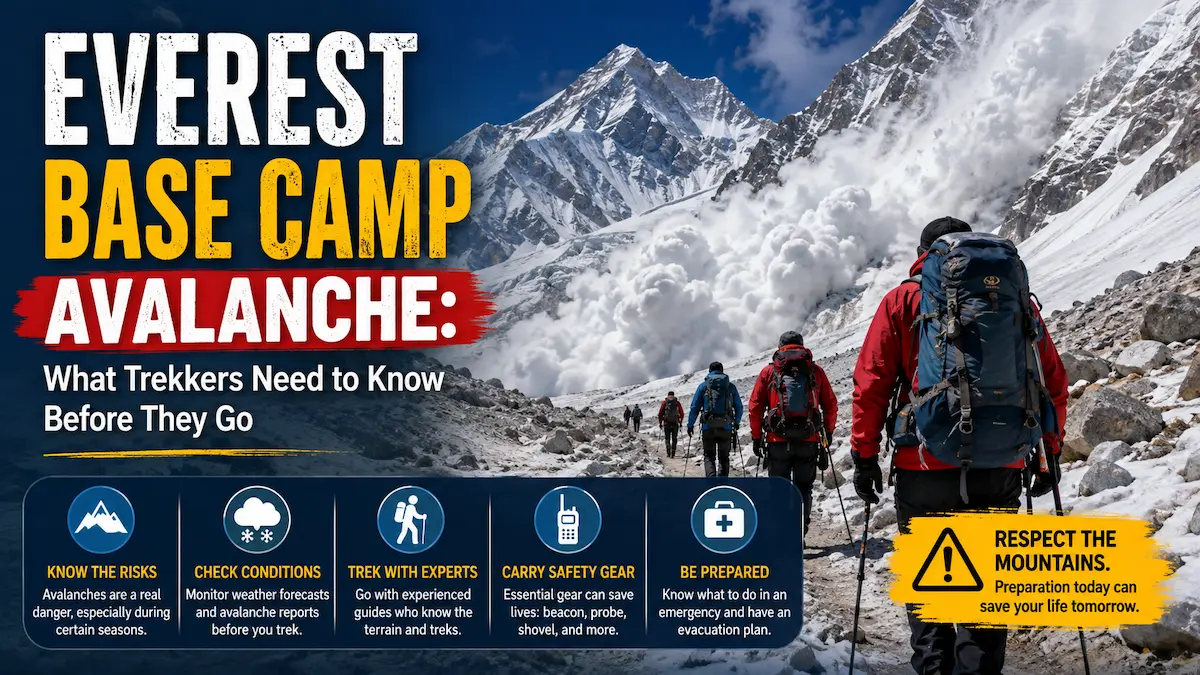
The phrase Everest Base Camp avalanche can stop a trekker cold. It sounds sudden. It sounds remote. It also brings up the question most people ask too late: what should I know before I go?
Everest Base Camp sits in a high mountain environment where snow, weather, and terrain can change fast. That makes preparation matter. Good planning does not remove every risk, but it helps you make smarter decisions on the trail.
This guide explains the basics in clear terms. You will learn what avalanche risk means, why timing matters, and how to use practical trip information to plan a safer trek.
What Does an Everest Base Camp Avalanche Mean for Trekkers?
An avalanche is a rapid movement of snow down a mountain slope. Near Everest Base Camp, that matters because the Khumbu region includes steep terrain and changing winter and spring conditions.
Trekkers often hear the term and think only of dramatic events. The real issue is broader. Risk depends on weather, slope angle, snowpack, and route conditions. That is why the same trail can feel very different from one week to the next.
The safest response is not fear. It is awareness. You need current route information, realistic timing, and a plan that respects mountain conditions.
Why the term matters in planning
People searching for Everest Base Camp avalanche usually want two things. They want context, and they want a practical way to judge risk before booking or walking.
Key points:
- Risk changes with weather
- Timing matters on high-altitude routes
- Current trail updates are more useful than old assumptions
When Is Avalanche Risk Higher on the Everest Route?
Avalanche risk is not the same all year. It tends to rise when snowfall, warming, or unstable conditions affect mountain slopes. That can make certain sections of a trek more unpredictable.
Spring and winter are often the seasons trekkers think about most. Both can bring serious mountain conditions. Clear skies do not always mean safe slopes, and a sunny day can still follow a storm cycle.
The lesson is simple. Do not plan only around the calendar. Plan around conditions, route status, and your comfort with changing terrain.
Reading the season carefully
A trekker who studies seasonal conditions can make better calls about pace, side trips, and rest days. That is especially important on long routes where altitude and fatigue already add pressure.
You should ask:
- Has the route had recent snow?
- Are local updates current?
- Do your dates leave room to adjust?
What Information Helps You Plan a Safer Trek?
Reliable planning starts with the right details. For Himalayan trekking, those details include day-by-day itineraries, permit updates, elevation profiles, teahouse locations, and gear reviews.
Those resources help you understand more than just the final destination. They help you map the whole journey. That matters on a route where each valley, village, and altitude gain changes the experience.
A trek is safer when you know what lies ahead. You can pace yourself better, choose better stop points, and reduce avoidable mistakes.
The planning details that matter most
Strong trip planning usually includes:
- Day-by-day itineraries
- Permit updates
- Elevation profiles
- Teahouse locations
- Gear reviews
These are not extras. They shape real decisions on the trail.
“Good mountain planning is built on current route information, not assumptions.”
How Can Trekkers Reduce Risk on the Trail?
No trekker can control mountain weather. You can control preparation, timing, and the quality of your information. That is where most safer decisions begin.
Start with the route itself. Know where you will sleep, how much climbing each day requires, and where the harder sections sit. Then match your pace to the terrain instead of forcing a tight schedule.
Gear also matters. Proper equipment will not eliminate avalanche exposure, but it can improve comfort and readiness in severe conditions.
Simple steps that improve decision-making
- Check route conditions before departure
- Review elevation gain for each day
- Build rest time into the schedule
- Use up-to-date gear guidance
- Stay flexible if conditions shift
A flexible plan often works better than a rigid one. High mountain trips reward patience.
Why Do Permit Updates and Route Notes Matter So Much?
Permits and route notes may sound administrative. They are not. They help trekkers avoid confusion and plan with current information.
A route can change in useful but subtle ways. Teahouse availability may shift. Trail conditions may change. Permit requirements may also update. Small changes like these affect timing, comfort, and the choices you make each day.
When you are trekking near Everest Base Camp, those details become part of risk management. The less guesswork you have, the better your trip planning becomes.
Practical planning support for the Himalayas
Trekkhabar provides in-depth trekking and travel coverage from Nepal, including:
- On-the-ground guides
- Real permit updates
- Authentic Himalayan stories
- Practical planning resources
That mix matters because the route is only one part of the story. The full picture includes access, timing, and trail reality.
What Should You Expect From Teahouses and Altitude?
Teahouses shape the trekking experience more than many first-time visitors expect. They affect rest, food, comfort, and schedule. On a route as demanding as Everest Base Camp, that matters.
Altitude creates its own pressures. You can feel strong one day and drained the next. That is why a steady itinerary with clear elevation planning is useful. It helps you avoid overreaching when the mountain already asks a lot from your body.
A safer trek often comes from modest, careful choices. Sleep well. Move steadily. Respect altitude. Keep your day practical.
What smart trekkers look for
- Reliable stop points
- Clear elevation gains
- Enough time to recover
- A realistic pace
- Proper acclimatization
These details can shape the whole experience.
How Does Trekkhabar Help You Plan Better?
Trekkhabar focuses on in-depth trekking and travel coverage from Nepal. The publication gives trekkers and climbers practical resources that help them plan safer, better informed trips.
That includes itinerary guidance, permit updates, elevation profiles, teahouse locations, and gear reviews. It also includes stories and reporting from the Himalayas, which help readers understand what the region feels like on the ground.
For a topic like Everest Base Camp avalanche, that kind of context matters. You are not just reading about a destination. You are preparing for it.
What readers can use before they go
- Trip planning guides
- Route and permit updates
- Gear insights
- Himalayan travel stories
Those resources help turn a risky guess into a considered plan.
Conclusion: The Smart Way to Approach Everest Base Camp
An Everest Base Camp avalanche is not just a dramatic phrase. It is a reminder that mountain travel demands respect, timing, and current information.
Trekkers who plan carefully make better decisions. They study the route. They check updates. They leave room to adapt. That approach does not guarantee perfect conditions, but it gives you a stronger foundation for a safer trek.
Next step: before you finalize any Everest Base Camp plan, review current route information, permit updates, and elevation details so your itinerary matches real mountain conditions.
Plan your trek with better information.
Explore Trekkhabar’s trekking guides, permit updates, elevation profiles, and gear reviews before you head to the Himalayas.
Read more at Trekkhabar
