


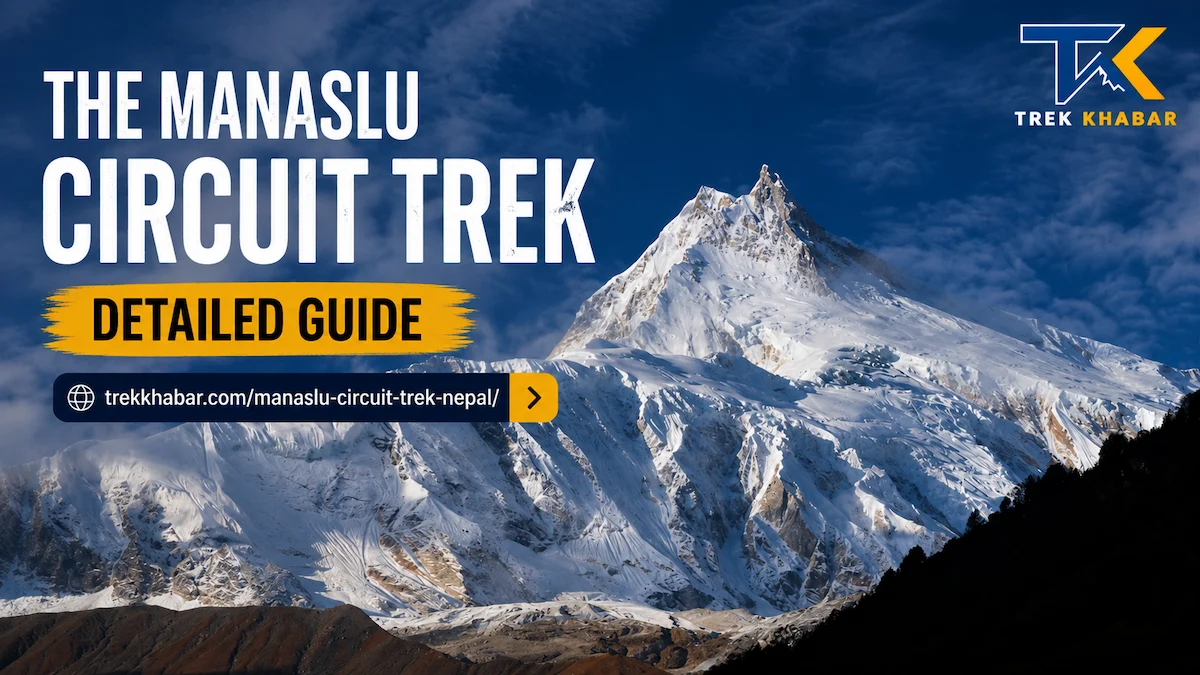
This is the ultimate, non-plagiarized guide to the Manaslu Circuit Trek. Whether you are a local Nepali traveler or an international adventurer, this breakdown covers the logistics, costs, and grit required for one of the world’s last great “teahouse” frontiers.
🏔️ The Manaslu Circuit: Fast Facts
Total Distance: Approximately 177 km (110 miles).
Highest Point: Larkya La Pass (5,106m / 16,752ft).
District: Primarily Gorkha District, ending in Manang District.
Permit Status: Restricted Area (Requires a licensed guide).
Manaslu Circuit Trek Map & Route
The trek follows the ancient salt-trading route along the Budhi Gandaki River.
- Lowlands: Machha Khola to Jagat (Subtropical forests).
- Highlands: Namrung to Samagaon (Tibetan Buddhist culture).
- The Pass: Dharamsala to Bhimthang via the Larkya La.
- The Exit: Down through the rhododendron forests of the Marsyangdi Valley.
Itineraries: Choose Your Pace
The “Classic” 15-Day Itinerary
Best for: Photography, acclimatization, and side trips to Manaslu Base Camp.
Days 1–5: Kathmandu to Namrung (Gradual ascent).
Day 6: Namrung to Lho (Views of Mt. Manaslu).
Day 7: Lho to Samagaon.
Day 8: Acclimatization Day (Hike to Manaslu Base Camp – 4,800m).
Day 9: Samagaon to Samdo.
Day 10: Samdo to Dharamsala.
Day 11: Cross Larkya La Pass (5,106m) to Bhimthang.
Days 12–15: Descent to Dharapani and drive back to Kathmandu.
The “Rapid” 12-Day Itinerary
Best for: Fit trekkers with limited time.
Day 1-2: Drive to Machha Khola; trek to Jagat.
Day 3-5: Reach Namrung and Lho.
Day 6-7: Samagaon and acclimatization.
Day 8-9: Samdo to Dharamsala.
Day 10: Larkya La Pass.
Day 11-12: Dharapani to Kathmandu.
The 7-Day “Express” Itinerary (Is it possible?)
Warning: A 7-day Manaslu trek is not recommended due to extreme altitude risk. However, for those using a Helicopter return or only trekking to the lower regions:
Day 1-3: Drive to Machha Khola, trek to Namrung.
Day 4-5: Reach Samagaon and explore Birendra Lake.
Day 6: Early morning helicopter evacuation from Samagaon to Kathmandu.
Day 7: Buffer day/Return.
Note: Walking the full circuit in 7 days is physically impossible for 99% of humans due to the Larkya La pass crossing requirements.
Cost Breakdown: International vs. Nepali
For International Trekkers
Package Cost: $900 – $1,400 USD.
Permits: (Autumn) $100 for 1st week; (Spring) $75 for 1st week.
Guide: Mandatory (approx. $30–$40 per day).
For Nepali Trekkers (आन्तरिक पर्यटक)
The Manaslu Circuit has become a “bucket list” item for Nepalis. It is significantly cheaper because you do not need the $100 Restricted Area Permit.
Estimated Cost: NPR 45,000 – 65,000 for the full circuit.
Permits: You only pay for the MCAP and ACAP (approx. NPR 200–500).
Guide: While not legally “mandatory” for Nepalis in the same way, it is highly recommended for the Larkya La pass due to trail obscurity and snow.
Difficulty & Preparation
Is Manaslu harder than Everest Base Camp?
Yes. While EBC is higher in total altitude, Manaslu is more physically taxing because:
- The Pass: Larkya La is longer and steeper than the trek to EBC.
- The Trail: It is more “wild”—expect more landslide-prone areas and narrow cliffside paths.
- Facilities: Teahouses are further apart, meaning longer walking days.
The “Must-Dos”
Manaslu Base Camp (MBC): Don’t just walk past. Spend a day in Samagaon and hike up to MBC for a face-to-face look at the “Mountain of the Spirit.”
Pungyen Gompa: A stunning monastery located on a hidden plateau near Samagaon.
Birendra Lake: A turquoise glacial lake at the foot of the Manaslu glacier—perfect for a rest day.
Final Quick-Fire FAQs
How many days?
Standard is 14; Minimum is 12; Maximum 18.
Do I need a guide?
Yes. It is a legal requirement for foreigners to have at least one authorized guide.
Best Time?
October–November (Clear skies) or March–May (Rhododendrons).
The Verdict: Manaslu is the perfect middle ground for someone who finds the Annapurna Circuit too “busy” and the Everest region too “commercial.” It is raw, remote, and absolutely rewarding.
