


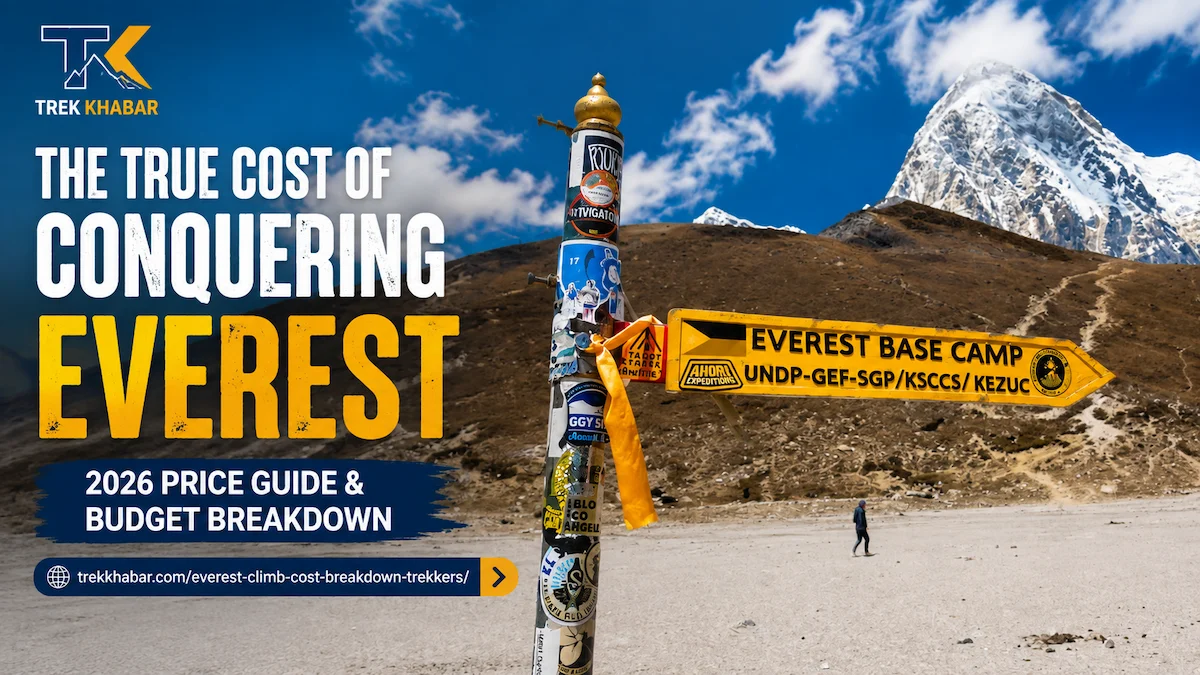
Standing on top of the world is a dream for many, but it comes with a price tag as massive as the mountain itself. If you are planning to tackle the 8,848.86-meter giant in 2026, you need to be prepared for more than just the physical toll—the financial investment is significant.
Here is the definitive guide to the total cost of climbing Mount Everest in 2026.
The Big Picture: Average Costs in 2026
The cost of an Everest expedition varies wildly based on the level of support, the side of the mountain you choose (Nepal vs. Tibet), and the reputation of your guide service.
| Expedition Type | Estimated Cost (USD) |
| Budget (Nepali-led) | $35,000 – $45,000 |
| Standard (Mid-range) | $50,000 – $70,000 |
| Western-Guided (Premium) | $75,000 – $95,000 |
| Luxury / Flash Expeditions | $100,000 – $200,000+ |
Key Trend: For 2026, the average climber spends roughly $61,000. Prices have risen significantly due to a 36% hike in Nepal’s mandatory permit fees.
1. The Mandatory “Entry Ticket”: Permits & Fees
You can’t just walk onto Everest. The largest fixed cost is the government permit.
- Nepal (South Side) Permit: As of late 2025/2026, the fee has increased from $11,000 to $15,000 per person.
- Tibet (North Side) Permit: These are usually bundled with logistics but range from $15,800 to $18,000.
- Additional Red Tape: You’ll also need to budget for a Liaison Officer ($3,000 per team), a refundable garbage deposit ($4,000 per team), and local community fees ($20–$50).
2. Guiding and Sherpa Support
Unless you are an elite solo climber, you will need a team.
- Personal Sherpa: Hiring a dedicated climbing Sherpa costs between $5,000 and $10,000, which includes their salary, insurance, and equipment.
- Summit Bonuses: It is customary to pay a bonus if you reach the summit (or even the high camps), typically $1,500 – $2,000.
3. Life Support: Oxygen & Gear
Above 8,000m (the “Death Zone”), supplemental oxygen is a must for 97% of climbers.
- Oxygen Systems: A typical climber uses 5–7 bottles. Including the mask and regulator, this costs roughly $4,000 – $6,000.
- Personal Gear: High-altitude down suits, triple boots, and technical hardware can easily run you $7,000 – $10,000.
4. Logistics & Travel
- Flights: Round-trip to Kathmandu plus the legendary flight to Lukla will cost $1,500 – $2,500.
- Trek to Base Camp: Food and lodging during the 10-day trek to EBC costs about $1,500.
- Insurance: Search and rescue (helicopter) and medical insurance are mandatory and cost between $1,000 and $3,000.
Why the price hike in 2026?
The Nepalese government increased fees to fund better waste management, enhance rescue operations, and regulate the growing number of climbers. While it makes the mountain more expensive, the goal is a safer and cleaner Everest.
Final Pro-Tip
Don’t just go for the cheapest option. In the Himalayas, you often get what you pay for. A “budget” expedition might cut corners on oxygen quality or Sherpa-to-client ratios—two things you definitely don’t want to skimp on at 29,000 feet.
Ready to start training?
SEO Keywords: Mount Everest climb cost 2026, Everest expedition price, Nepal climbing permit 2026, Sherpa guide cost, Everest gear list budget.
