


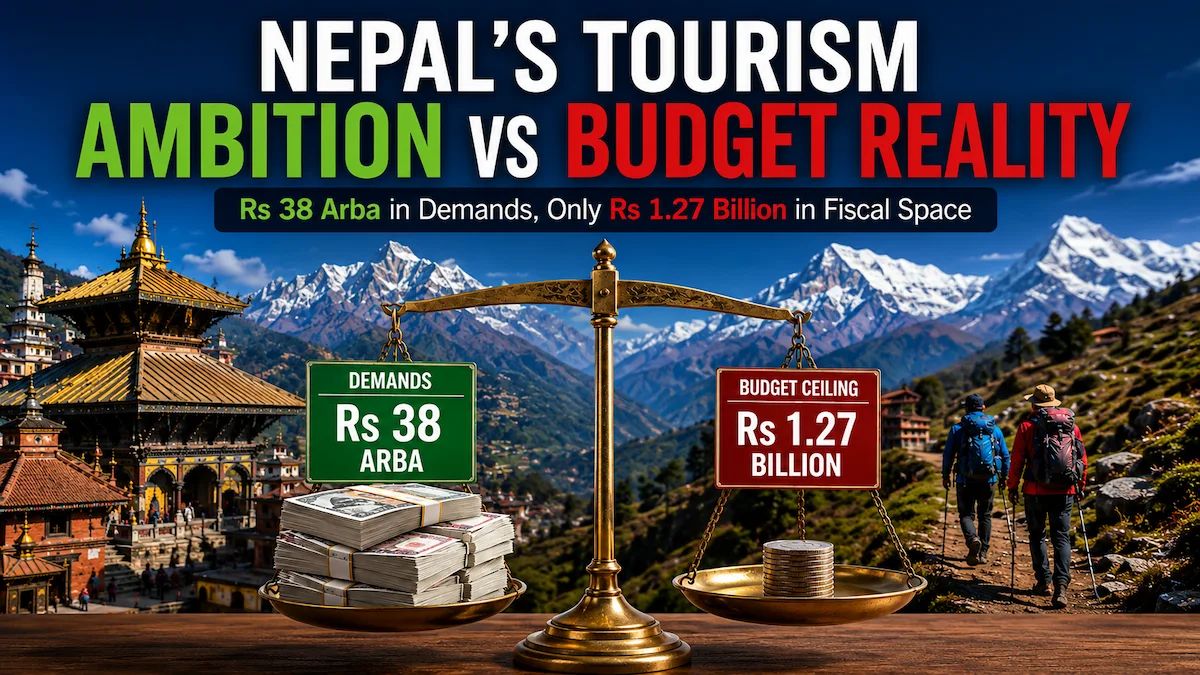
Nepal’s tourism bugdet on tourism sector stands at a historic crossroads. On one side lies enormous ambition: religious circuits stretching from Pashupatinath to Muktinath, Himalayan trekking corridors connecting remote mountain settlements, hill stations envisioned as regional tourism hubs, and infrastructure projects aimed at transforming Nepal into a year-round global destination. On the other side lies a harsh fiscal reality: the Ministry of Culture, Tourism and Civil Aviation reportedly received a budget ceiling of only NRs 1.27 billion while project demands crossed NRs 38 billion (38 arba).
The gap between aspiration and allocation reveals not only Nepal’s budgetary limitations, but also the growing importance of tourism as a pillar of the national economy. Tourism is no longer viewed merely as hospitality or trekking; it is increasingly treated as infrastructure, regional development, employment generation, foreign exchange strategy, cultural diplomacy, and geopolitical branding.
The situation raises fundamental questions:
- Why are tourism project demands so high?
- Why is the government unable to allocate more funds?
- Which projects are being prioritized?
- Can Nepal realistically build large tourism infrastructure with limited resources?
- What does this reveal about Nepal’s economic direction?
This article explores the widening disconnect between tourism ambitions and financial capacity in Nepal, while examining the opportunities, risks, politics, and future implications of tourism-led development.
Tourism as Nepal’s Economic Lifeline
Tourism occupies a unique position in Nepal’s economy. Unlike manufacturing-heavy economies, Nepal depends heavily on remittance, agriculture, and services. Tourism is one of the few sectors capable of generating:
- Foreign exchange earnings
- Employment
- Rural income
- Infrastructure development
- International visibility
- Investment opportunities
Following the COVID-19 collapse of global tourism, Nepal has aggressively attempted to revive the sector through promotional campaigns, infrastructure proposals, and destination diversification.
The Nepal Tourism Board (NTB) has recently approved ambitious tourism budgets focused on infrastructure, destination promotion, trekking route development, and sustainable tourism.
Government policy documents and tourism plans increasingly emphasize:
- Spiritual tourism
- Adventure tourism
- Rural tourism
- Homestay expansion
- Eco-tourism
- Himalayan trekking
- International marketing
- Digital tourism systems
Recent government plans also propose campaigns such as “Devbhumi Nepal” to promote Nepal as a global spiritual tourism hub.
Understanding the Rs 38 Arba Demand
The reported project demand exceeding NRs 38 billion did not emerge from a single mega-project. Instead, it reflects hundreds of proposals from across Nepal.
These proposals broadly fall into four major categories:
- Tourism infrastructure
- Religious and spiritual corridors
- Hill station development
- Himalayan trekking route expansion
Each category represents a different vision of Nepal’s tourism future.
1. Tourism Infrastructure: Building Access to Destinations
The largest portion of project demands reportedly relates to tourism infrastructure.
This includes:
- Access roads
- Airports and airstrips
- Tourism service centers
- Cable cars
- View towers
- Visitor inforation systems
- Tourism parks
- Convention centers
- Urban beautification
- Waste management systems
- Drinking water and sanitation projects
- Rescue and emergency facilities
Nepal’s tourism problem has never been a lack of destinations. The country possesses extraordinary natural and cultural diversity. The challenge has always been accessibility and infrastructure quality.
Many iconic destinations remain difficult to reach because of:
- Poor roads
- Unreliable air connectivity
- Weak sanitation
- Limited accommodation
- Inadequate safety systems
- Lack of digital infrastructure
For example, many trekking regions still struggle with:
- Uunreliable communication,
- Seasonal road destruction,
- Insufficient health posts,
- Weak emergency evacuation systems.
The government has acknowledged these gaps in previous tourism budgets. Earlier allocations included funds for tourism infrastructure repair, rescue centers, and tourism roads.
However, the scale of infrastructure demand now far exceeds available public funding.
- Infrastructure Politics and Regional Competition
- Tourism infrastructure has also become politically sensitive.
Every province, municipality, and constituency wants tourism designation projects because tourism investment brings:
- Roads,
- Hotels,
- Jobs,
- Visibility,
- Political capital.
As a result, local governments aggressively submit proposals to federal ministries.
- A hilltop viewpoint becomes a “tourism destination.
- A local temple becomes a “religious circuit.”
- A seasonal trail becomes a “trekking route.”
This creates enormous pressure on the Tourism Ministry.
Many proposals are locally important but economically weak. Others have strong tourism potential but lack feasibility studies or sustainability planning. The result is a massive accumulation of project requests with limited prioritization.
2. Religious Tourism: Nepal’s Emerging Strategic Bet
One of the strongest areas of tourism demand involves religious and spiritual tourism. Nepal is attempting to reposition itself not only as the land of Everest, but also as:
- The birthplace of Buddha
- A Hindu pilgrimage center
- A spiritual destination in the Himalayas
Projects reportedly include development of:
- Pashupatinath corridors
- Lumbini infrastructure
- Janakpur religious circuits
- Muktinath access routes
- Buddhist pilgrimage trails
- Ramayana circuits
- Meditation and yoga tourism centers
The government’s recent “Devbhumi Nepal” vision directly supports this approach.
Why Religious Tourism Matters
Religious tourism offers several advantages over seasonal adventure tourism.
- Year-Round Visitors: Trekkers come seasonally but Pilgrims travel year-round.
- Regional Tourist Markets: Religious tourism attracts large numbers of Indian pilgrims, which is critical because India remains Nepal’s largest tourism source market.
- Lower Risk: Pilgrimage tourism is less vulnerable to weather disruptions compared to high-altitude trekking.
- High Multiplier Effect: Pilgrims spend on:
- Hotels
- Food
- Transport
- Religious offerings
- Local markets
- Cultural activities
- Geopolitical Branding: Lumbini gives Nepal unique international Buddhist diplomacy potential. This partly explains why religious tourism proposals are rapidly increasing.
3. Hill Stations: Nepal’s Domestic Tourism Boom
Another major category involves hill station development. Hill stations are elevated tourism zones developed for:
- Recreation
- Scenic views
- Climate tourism
- Domestic holidays
- Resort economies
Nepal has seen a major rise in domestic tourism over the past decade. As incomes rise and road connectivity expands, Nepalis increasingly travel internally for:
- Short vacations
- Weekend travel
- Family tourism
- Religious visits.
Municipalities now compete to create:
- View towers
- Hill resorts
- Picnic parks
- Cable cars
- Eco-tourism destinations.
Hill station proposals are often politically attractive because they produce visible infrastructure quickly. However, critics argue many such projects:
- Duplicate each other
- Lack environmental review
- Overestimate tourist demand.
4. Himalayan Trekking Routes: Nepal’s Global Brand
Despite diversification efforts, trekking remains Nepal’s strongest international tourism identity. The Himalayas continue to drive:
- Global recognition
- Adventure tourism
- Foreign currency inflows
- Rural mountain economies.
Project proposals reportedly include:
- Trail upgrades
- Suspension bridges
- Trekking shelters
- Rescue infrastructure
- Digital permit systems
- Waste management
- Route diversification
Recent tourism plans emphasize promotion of:
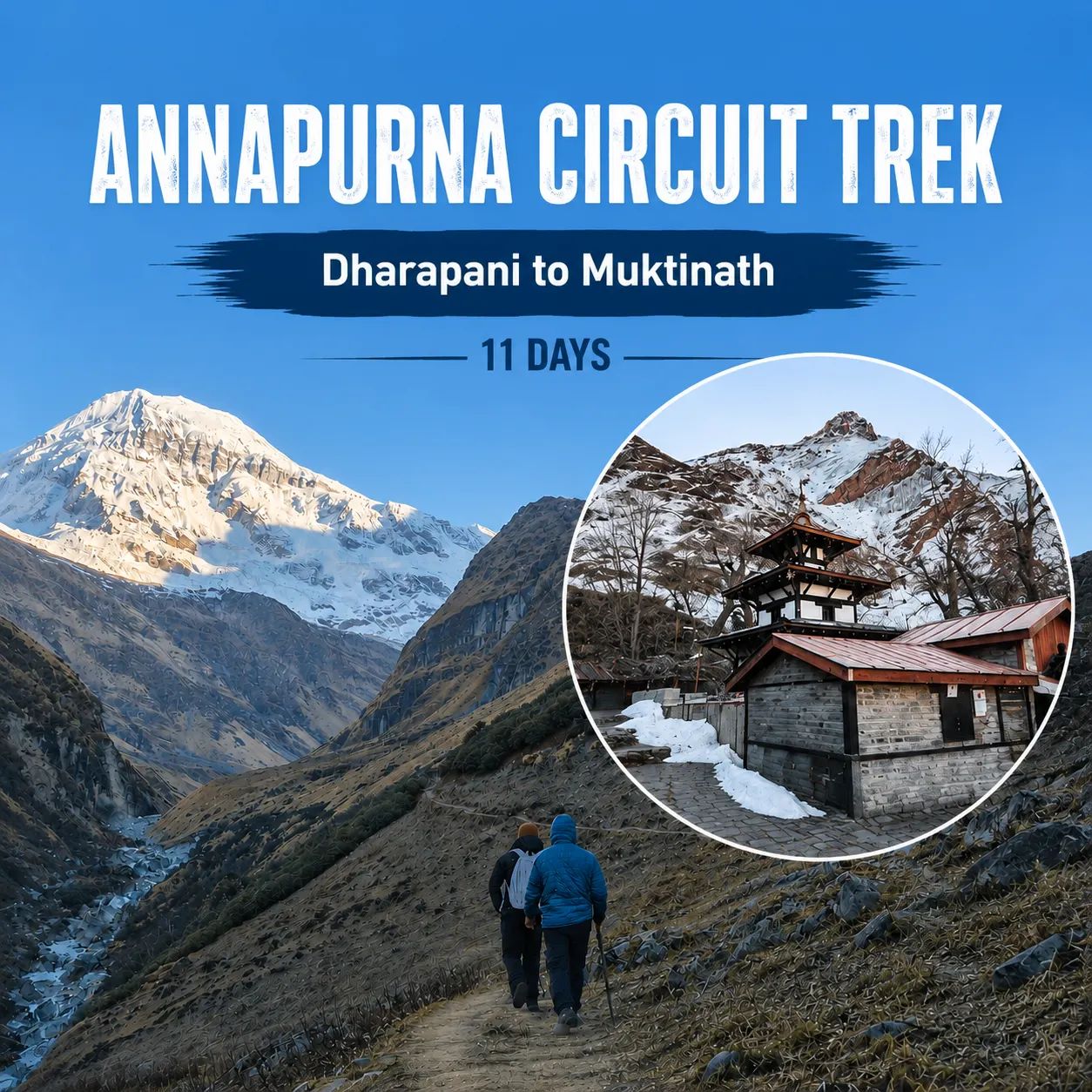
- Annapurna Treks
- Manaslu Treks
- Mustang,
- Langtang,
- Eastern Himalayan routes
- Lesser-known trekking corridors
Why Trekking Infrastructure Matters
Trekking infrastructure affects:
- Safety
- International reputation
- Tourist spending
- Rural livelihoods
Countries are increasingly investing in mountain tourism. Some of which are:
- India
- Bhutan
- Pakistan
- Peru
- And Central Asian states
In such case, Nepal cannot rely solely on Everest branding forever.
Modern trekkers now expect:
- Digital bookings
- Reliable internet
- Safer trails
- Quality tea houses
- Sustainability standards
- Emergency systems
Recent tourism discussions also show rising demand for:
- Luxury trekking
- Guided trekking
- Wellness trekking
- Premium adventure experiences
The Funding Crisis
If tourism is so important, why is the budget ceiling only NRs 1.27 billion? The answer lies in Nepal’s broader fiscal crisis.
Nepal currently faces:
- Low capital expenditure efficiency
- Weak revenue collection
- Rising debt obligations
- Import dependency
- Pressure on recurrent spending
The National Planning Commission has already reduced budget ceilings for many ministries citing fiscal discipline.
Tourism suffers because:
- It competes with health
- Education
- Social security
- Infrastructure
- Federal transfers
- Debt servicing
The government simply cannot fund every tourism proposal.
A Structural Problem: Too Many Projects, Too Little Prioritization
Nepal’s tourism development suffers from fragmentation. There are:
- too many projects
- too many agencies
- too much political intervention
- insufficient long-term planning
Many tourism projects are:
- Initiated without feasibility studies
- Duplicated across ministries
- Delayed for years
- Abandoned midway
This creates:
- Budget leakage
- Unfinished infrastructure
- Declining public trust
The Rs 38 billion demand therefore reflects not only ambition — but also institutional inefficiency.
Can the Private Sector Fill the Gap?
Increasingly, Nepal may depend on:
- Private investment
- Public-private partnerships
- Foreign investors
- Local governments
The government has already promoted:
- Hotel investment
- Cable cars
- Resort development
- Tourism infrastructure partnerships
However, private investment concentrates mainly in profitable regions such as:
- Kathmandu
- Pokhara
- Chitwan
Conclusion
The contrast between a NRs 1.27 billion budget ceiling and project demands exceeding NRs 38 billion captures the central dilemma of Nepal’s development model: massive ambition constrained by limited fiscal capacity. Yet the surge in tourism proposals also reflects optimism.
From religious corridors to Himalayan trails, from hill stations to eco-tourism zones, Nepal is attempting to redefine tourism as a national development strategy rather than merely an economic sector.
The challenge now is not simply finding more money. It is deciding:
- Which projects truly matter
- Which destinations can become globally competitive
- How Nepal can grow tourism without destroying its natural and cultural foundations.
If managed strategically, tourism could become Nepal’s strongest engine for:
- Employment
- Regional balance
- Foreign exchange
- International identity
If managed poorly, it risks becoming another cycle of fragmented projects, political spending, environmental degradation, and unfinished infrastructure.
The Rs 38 billion demand is therefore more than a budget issue.
